
Deep Space Food Challenge
Harnessing the power of space to solve every day food production challenges for Canadians
Introduction
The results are in!
Transcript
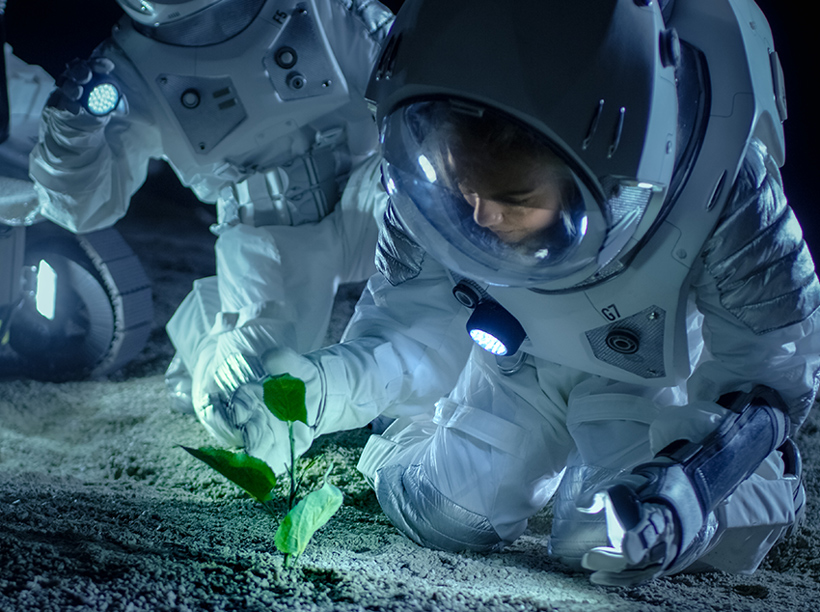
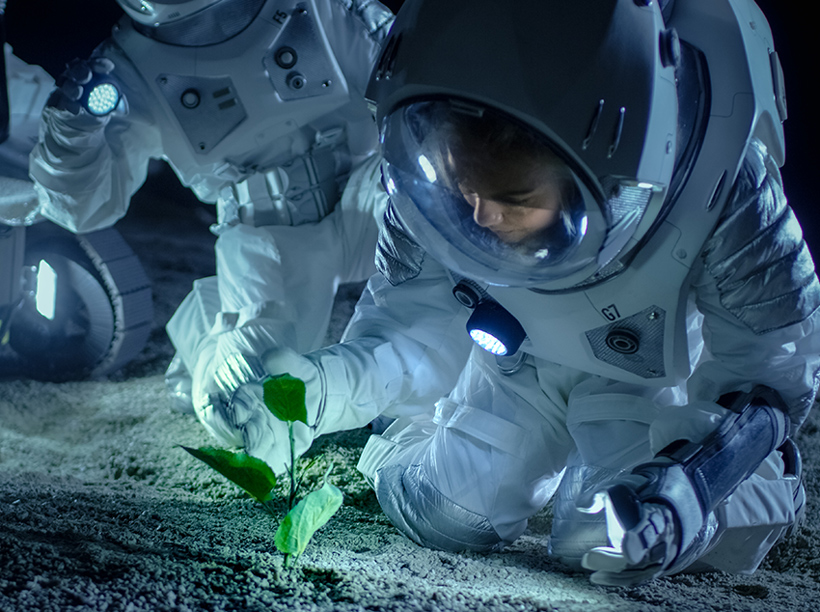
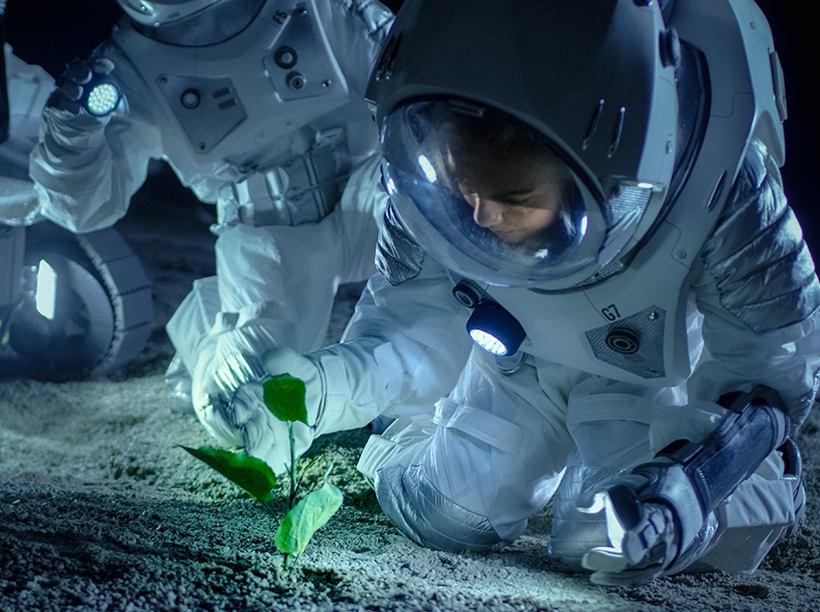
Making a grilled cheese sandwich is simple. Unless you’re on the Moon. Or flying in space. Right now, astronauts aboard the Space Station get food thanks to spacecraft regularly launching from Earth. But future astronauts on a trip to Mars will spend years away from our planet. That means no quick trips to the grocery store or cargo ships bringing supplies. They’ll have to bring just about everything they need with them. Is that even feasible?
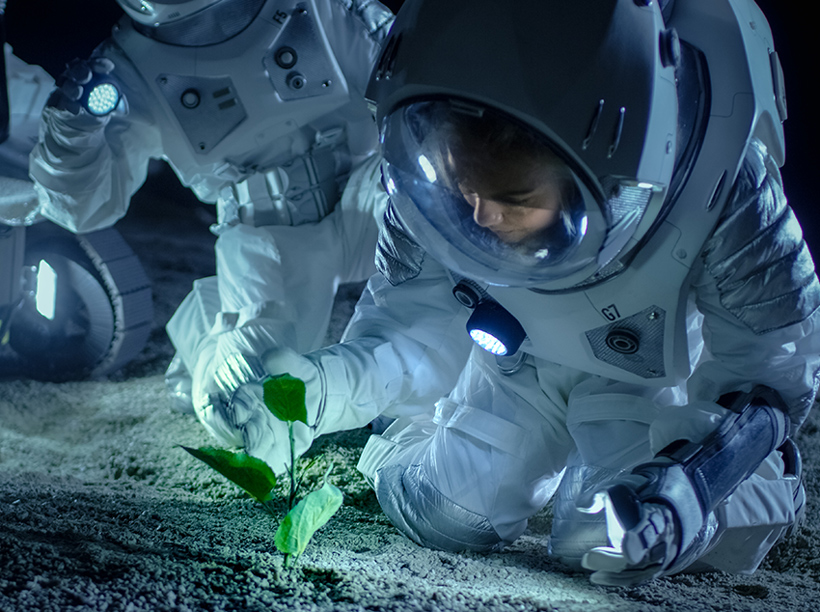
To boldly go where no human has gone before, we have to invent food production systems that can be used in space. These new solutions could also improve our food systems on Earth. They might even help us reduce food insecurity on our planet. That’s why NASA and the Canadian Space Agency are launching the Deep Space Food Challenge. Participants can win prize money for their ideas on how to keep our astronauts fed on future space exploration missions. We believe you can make it happen.
Go to deepspacefoodchallenge.org and get involved today.
Would you like to develop food production technologies and see your ideas support long-duration missions in space while benefiting people on Earth? If so, the Deep Space Food Challenge is for you!
The intersection of space-based and terrestrial food production
Food is a critical component of all human space exploration missions; but even more so for future missions to the Moon and Mars. As space missions increase in duration and extend further away from Earth there is a need to reduce the resupply of food from Earth while at the same time provide astronauts enjoyable, yet nutritious foods, to ensure they remain at their physical and psychological best. Innovative food systems that maximize safe and nutritious food outputs, with minimal inputs, will be key for sustainable human presence on the lunar surface and for future missions to Mars.
How can food production innovations benefit both people on Earth and astronauts in space?
Food security is a significant chronic challenge on Earth in urban, rural, Northern and remote communities, and within “harsh” environments. Through this challenge, innovators will develop compact and novel advanced food production solutions that have the potential to further enhance local production, reduce food supply chain shortages, and reduce the impact on the resources needed for food production in extreme environments, disaster-affected areas and resource-scarce regions.
The Deep Space Food Challenge is a joint prize competition launched in parallel by the Canadian Space Agency (CSA), the National Aeronautics and the Space Administration (NASA) Centennial Challenges Program, and their allied organization, the Methuselah Foundation.
International collaboration has been key to the success of countless space missions. This Challenge represents a first of its kind collaboration between CSA and NASA in the organization of a prize competition to support the space policies of the Government of Canada and the United States Government while having broader terrestrial benefits.
The Canadian component of the Deep Space Food Challenge is intended to incentivize Canadian innovators to advance food production technologies to support long-duration missions in space and to improve the accessibility of nutritious food across Canada, including the North.


The Challenge
The 2019 Canadian Space Strategy includes an important element associated with exploring "how to help improve the accessibility of food across Canada, including the North, with the aim of, one day, taking these lessons learned to help astronauts grow food off Earth". The drive to develop space technology for low mass, low energy and low waste systems is directly applicable to the goal of harnessing space to solve everyday challenges for Canadians, in particular for Canada's northern and remote communities.
The food system will need to be an integrated solution that:
- Provides all daily nutritional needs;
- Provides a variety of palatable and safe food choices;
- Enables acceptable, safe, and quick preparation methods; and
- Limits resource requirements with no dependency on direct and periodic resupply from Earth over durations increasing from months to years.
The Challenge Statement
Create novel food production technologies or systems that require minimal inputs and maximize safe, nutritious, and palatable food outputs for long-duration space missions, and which have potential to benefit people on Earth.
Objectives
CSA is calling on Canadian innovators to submit a concept application for solutions that:
- Help fill food gaps for a three-year round-trip mission with no resupply;
- Feed a crew of four (4);
- Improve the accessibility of food on Earth, in particular, via production directly in urban centres and in remote and harsh environments;
- Achieve the greatest amount of food output with minimal inputs and minimal waste; and
- Create a variety of palatable, nutritious, and safe foods that require little processing time for crew members.
This Challenge seeks to incentivize teams to develop novel technologies, systems and/or approaches for food production that need not meet the full nutritional requirements of future crews, but can contribute significantly to, and integrate with, a comprehensive food system.
Assessment Criteria
The assessment of solutions will be based on the following overall and performance criteria:
- A food production technology that is innovative, novel, and sustainable with a feasible scenario for the potential technical use of the solution within terrestrial food systems.
- Scientific, technical merit, and feasibility of the design.
- Acceptability of the food production process and acceptability/palatability of the resulting food products.
- Safety of the food production process, including environmental safety, and safety of the resulting food products, including safety for human consumption.
- Resource requirements of the food production process (inputs); quantity of food outputs in relation to the inputs and waste; and nutritional quality of the resulting food products.
- Reliability/Stability of the inputs and outputs; reliability of the technology with less than 10% loss of functionality or food production.
For more information on the judging criteria, please see the Applicant Guide.
Key Dates for the Challenge:
- Phase 1: Design Report – Challenge is launched, and application intake is from January 12, 2021 until July 30, 2021. Up to 10 Canadian Semi-Finalists with the most promising Design Report detailing the plans for their novel food production system will receive CAD $30,000 each in Fall 2021, and move automatically on to Phase 2
- Phase 2: Kitchen Demonstration – Beginning in Fall 2021, Semi-Finalists will build a food production technology prototype (equivalent to a TRL 4Footnote 1) and have the prototype take part in a Kitchen-Level demonstration at an appropriate facility. Teams would also provide samples of food outputs (e.g., tangible nutritional products) from the prototype. Up to four (4) Canadian Semi-Finalists with the best scores from Phase 2 will receive CAD $100,000 each in Fall 2022 and will move on to become Phase 3 Finalists.
Note: In the Canadian Challenge, only Semi-Finalists selected in Phase 1 have the ability to participate in Phase 2. - Phase 3: Full System Demonstration – Finalists at this phase will grow and scale up their solutions in Canada over a 12 month period starting in Spring 2023. One Finalist with the most impressive results from Phase 3 will receive CAD $380,000 in Spring 2024 and become the Canadian Grand Prize Winner for The Deep Space Food Challenge.
Note: The number of winners and Canadian prize amounts may vary depending on the applications received. For each phase, prize amounts will not be less than the amount per winner indicated above.
Who Can Apply to the Challenge?
The Deep Space Food Challenge is open to for-profit or not-for-profit organizations and individuals registered to do business in Canada. Specifically, you can apply if you are:
- Businesses or other for-profit organizations in Canada;
- Not-for-profit organizations in Canada;
- Indigenous organizations and groups located in Canada;
- Post-secondary/academic institutions located in Canada; and
- Individuals or group of individuals based in Canada.
Individuals or groups of individuals are encouraged to submit an application to the Challenge, but in order to be eligible to receive prizes, they will be required to establish a Canadian legal entity (such as a corporation or a not-for-profit organization) capable of entering into binding agreements in Canada.
Interested U.S. and Other International Applicants may refer to the deepspacefoodchallenge.org website for more information on how to register and apply to the Challenge.
Please review the Applicant Guide in detail to confirm your eligibility before preparing and submitting your concept application.
Process & Prizes
-
Phase 1 – Challenge Launch and Design Application Intake
January 12, 2021
Applicants with a design for an advanced food production technology concept are invited to register their interest and apply to the Challenge. The deadline to apply is July 30, 2021, at 5:00 pm Central Time. At this phase, applicants are competing for CAD $30,000 in grant funding and the opportunity to become a Semi-Finalist entering into Phase 2 of the Challenge.
Note: Independent of the actual submissions, interested applicants may register their interest to apply to the Challenge and subscribe to be notified of new challenge information as it becomes available. Registration of interest benefits include notification of newly released challenge documentation/references, challenge related events, invitations to participate in learning events or webinars and potential networking opportunities. Registration of interest is optional and can be done by completing the registration of interest form.
-
Phase 2 – Up to 10 Semi-Finalists Will Test Their Prototype
Fall 2021
Up to 10 of the most promising food production technology designs will be selected to move on to Phase 2 of the Challenge. These Semi-Finalists will have a year to build a food production technology prototype (equivalent to a TRL 4 ) and demonstrate the prototype during a Kitchen-Level demonstration at an appropriate facility in Fall 2022. Teams will also provide samples of food outputs (e.g., tangible nutritional products) from the prototype, and may be asked to provide a vision for future potential application of the technology in a terrestrial context. Semi-Finalists are competing for CAD $100,000 in grant funding and the opportunity to become a Finalist entering Phase 3 of the Challenge. Other non-monetary benefits may be offered to participants at this stage.
Note: In the Canadian Challenge, only Semi-Finalists selected in Phase 1 have the ability to participate in Phase 2.
-
Phase 3 – Up to 4 Finalists Will Build a Full System Demonstration
Spring 2023
Up to four Finalists whose prototypes had the most impressive performance in Phase 2 will be selected to move on to Phase 3. At this stage, Finalists will have 12 months to build a full-scale food production technology and demonstrate the technology at an appropriate facility. Teams may be asked to provide a plan for future application of the demonstrated technology in a terrestrial context. Finalists at this stage are competing to become the Grand Prize Winner who will receive CAD $380,000 in grant funding. Other non-monetary benefits may be offered to participants at this stage.
-
Canadian Grand Prize Winner Selected
Spring 2024
A Canadian Grand Prize Winner will be selected from among the Finalists and announced in Spring 2024.
Up to 10 Prizes of CAD $30,000
Open to all eligible innovators submitting a Phase 1 concept application.
Up to 4 Prizes of CAD $100,000
Open to all Semi-Finalists participating in Phase 2.
Grand Prize of CAD $380,000
Open to all Finalists participating in Phase 3.
Note: The number of winners and Canadian prize amounts may vary depending on the number of applications received. Overall Prize amounts per phase will not be less than what is described above.
Please refer to the Applicant Guide for a more detailed description of the application, process, prize amounts, and challenge stages.
Jury

Lynn Blackwood
Policy Analyst-Food Security, Department of Health and Social Development – Nunatsiavut Government
-
Full bio
Lynn is a Nunatsiavut Beneficiary born and raised in Happy Valley- Goose Bay, NL. Lynn completed her Bachelor’s of Science in Human Nutrition at St. Francis Xavier University and her Dietetic Internship with the Health Care Corporation of St John’s now Eastern Health in St. John’s NL. Lynn works with the Nunatsiavut Government as a Policy Analyst focusing on the Food Security file. Lynn is one of few Indigenous Dietitians in Canada. Lynn has worked over 20 years as a Dietitian in the North West Territories, British Columbia and Newfoundland and Labrador. Lynn is Director of the Dietitians of Canada board and will be joining the Canadian Foundation of Dietetic Research board as a director this summer. In her spare time Lynn enjoys cooking, reading and exercise as well as spending time with her husband, daughter and 2 dogs.

Lynn Crawford
Celebrity Chef, Author, Restaurateur, Canadian Food Ambassador
-
Full bio
Acclaimed Food Network celebrity chef and bestselling author, Chef Lynn Crawford has over 25 years of culinary experience, including many years as executive chef for the Four Seasons Hotels in Toronto and New York. One of the highest profile chefs in the country and a genuine household name, she is continually sought after as a dynamic host, public speaker, brand ambassador, spokesperson and mentor.
Chef Lynn is recognized for her appearances as a competitor on Iron Chef Canada, Top Chef Masters and Iron Chef America, and as a judge on Top Chef Canada and Chopped Canada.
Chef Lynn is a longtime supporter of the farm-to-table movement and sustainability and a dedicated philanthropist, giving back by participating in several charitable initiatives.
Chef Lynn is passionate about cooking and educating and loves nothing more than sharing her knowledge, wisdom and expertise, teaching children, chefs and home cooks where their food comes from and to take pride in having a hand in the whole process of making and enjoying the healthy, delicious food they cook.

Lawrence Goodridge, PhD
Leung Family Professor of Food Safety & Director, Canadian Research Institute for Food Safety, Department of Food Science, Ontario Agricultural College – University of Guelph
-
Full bio
After completing a B.Sc. Honours degree in Microbiology at the University of Guelph, Lawrence completed both his M.Sc. and Ph.D. degrees in Food Science with an emphasis on microbial detection of foodborne pathogens, also at Guelph, before leaving for a Postdoctoral Fellowship to continue his training in microbial food safety in the laboratory of Dr. Michael Doyle in the Center for Food Safety at the University of Georgia. Prior to returning to Guelph, Lawrence has held faculty positions at the University of Wyoming and Colorado State University. More recently, he was the Ian and Jayne Munro Chair in Food Safety in the Food Science Department at McGill University. In January, 2019, Lawrence joined the Department of Food Science as Director of the Canadian Research Institute for Food Safety, where he holds the Leung Family Professorship in Food Safety. Dr. Goodridge conducts research related to control and detection of pathogenic microorganisms including bacteria, viruses and parasites. Dr. Goodridge has published more than 100 peer reviewed journal articles and book chapters, and has been awarded more than $30 million in research funding from US, Canadian and international funding sources.

Thomas Graham, PhD Co-Chair
Assistant Professor and PhytoGro Research Chair in Controlled Environment System, School of Environmental Sciences, Ontario Agricultural College – University of Guelph
-
Full bio
Thomas is an Assistant Professor in the School of Environmental Sciences and the PhytoGro Research Chair in Controlled Environment Systems at Ontario Agricultural College (University of Guelph). Over his nearly 25-year research career, including a 3-year NASA Post-Doctoral Research Fellowship, Thomas has participated in a wide variety of space-related research and outreach activities covering numerous ground, parabolic, sub-orbital, and ISS experiments/outreach activities. Thomas teaches upper year undergraduate and graduate courses in Controlled Environment Systems/Agriculture and Environmental Remediation, including modules on bioregenerative life-support for human space exploration. Thomas also advises numerous graduate and undergraduate research course students, and regularly serves as a mentor for grade school science projects. Thomas is involved in space-based STEM programs (e.g., TomatosphereTM), and is an editor for several scientific journals, including two recent special issues focusing of crop production in space and space analogues settings.

Chris Hadfield Co-Chair
Astronaut | First Canadian Commander of the International Space Station
-
Full bio
Referred to as “the most famous astronaut since Neil Armstrong,” Colonel Chris Hadfield became a household name as the first Canadian commander of the International Space Station. A heavily decorated astronaut, engineer, and pilot, Hadfield’s many awards include the Order of Canada, the Meritorious Service Cross, and the NASA Exceptional Service Medal. Hadfield is also a bestselling author of four books, an acclaimed musician, and the host of two internationally acclaimed television series, including National Geographic’s One Strange Rock.

Jas Jaaj
Managing Partner, AI and Data – Deloitte
-
Full bio
As Managing Partner, AI and Data, Jas oversees a global team of AI strategists, data scientists, machine learning & data engineers, and risk specialists, working to help businesses drive growth through innovation, technology and data-driven decision-making. Jas also champions our client’s and the firm’s acceleration to be an AI-first enterprise, collaborating with business leaders across the firm to infuse AI and a data-informed approach into all key market offerings to bring differentiated value to our client's transformation journey.
With over 20 years of experience in tech, data and AI, Jas specializes in collaborating with enterprises to transform their organizations from being AI-aware to AI-first. Prior to joining Deloitte, Jas has stellar track record of being an innovative leader, having led multiple practices in the emerging technology space, including Blockchain and Digital.
Jas is passionate about fueling the Canadian economy by leveraging the power of AI. He is a change agent and an active advisor to multiple external Boards and the AI start-up ecosystem, including being a member of Canada Space Agency’s Advisory Council on Deep Space Healthcare where he is helping shape Canada’s role in deep space missions to the Moon and Mars.

Chantal Langlois
Kitikmeot Regional Clinical Dietitian for the Nunavut Department of Health
-
Full bio
Chantal Langlois has been Kitikmeot Regional Clinical Dietitian for the Government of Nunavut Department of Health since 2017. Prior to coming to Nunavut, she worked for nearly thirty years in primary health care (Centre local de services communautaires-CLSC) in Québec performing clinical, community and public health nutrition, especially through Food Security, Healthy Lifestyles and Perinatal Programs. She holds a Dietetic BSc from Université Laval. On behalf of the GN-DH (Kitikmeot), she has been promoting and developing collaborations with researchers, community stakeholders, decision makers and funders to support local and regional Public Health Nutrition initiatives that further a healthy, autonomous, and sustainable Inuit Food System, such as the Indoor Year-Round Cambridge Bay Greenhouse Project.

Frank Leffelaar
Agri-food Tech Strategy & Growth Advisor, Mentor, Angel & Impact Investor, Founder – Crush Marketing
-
Full bio
Frank advises early-stage companies in Agrifood Tech on business and go-to-market strategy and supports them on their journey to get investment ready and scale-up. For the past 10 years he has been actively involved in the innovation ecosystem. As a mentor to startups, an angel and impact investor with an angel fund, as a leadership team member at an angel network and as an Executive in Residence focused on Agtech and Foodtech at a Cleantech accelerator. Prior to advising and mentoring early-stage companies Frank provided marketing strategy and services to SME’s with his agency Crush Marketing. He held senior marketing positions with high-tech SMEs in Canada and US Fortune 500 technology companies in Europe. He studied at the European Business School in London, lived and worked in 5 countries and enjoys traveling and exploring the wine regions of the world.

Lucie Poulet, PhD
NASA Postdoctoral Fellow – NASA Kennedy Space Center
-
Full bio
Lucie Poulet is currently a NASA Postdoctoral researcher at NASA Kennedy Space Center in Florida in the Exploration Research and Technology Program office, within the Space Crop Production group. Her research focuses on studying the interactions between ventilation and photosynthesis in reduced gravity environments, through modeling and experimentations, to design future space greenhouse modules. Lucie Poulet holds a doctorate in process engineering from Clermont Auvergne University (France), a Master of Science in aerospace engineering from Purdue University (Indiana, USA) and Master of Engineering from Nancy School of Mines (France). She participated in four Mars mission simulations (analog missions) - including a 4-month NASA-funded within the Hawaii Space Exploration Analog and Simulation (HI-SEAS) group - and four parabolic flights to test an experiment she had developed.

Annie Locas, PhD
National Manager, Food Safety Science Services – Microbiology, Canadian Food Inspection Agency
-
Full bio
Annie is the National Manager of Food Safety Science Services (Microbiology) at the Canadian Food Inspection Agency, where her team leads the coordination and implementation of the National food microbiological surveillance programs and related laboratory activities during food safety investigations and foodborne illness events. Annie has 20 years of academic and professional experience related to microbiological risks in food and drinking water as well as management and response of food safety events, surveillance of foodborne pathogens, detection methodologies and risk assessment. Annie is an International Food Safety Authorities (INFOSAN) focal point and serves on the World Health Organization (WHO) Technical Advisory Group on Food Safety – Safer food for better health that supports the update of the WHO Global Strategy for Food Safety.

Cara Wehkamp, PhD
Special Advisor to the President on Indigenous Initiatives – University of Guelph
-
Full bio
Dr. Cara Wehkamp is of Algonquin and European ancestry and a member of the Antoine Nation. As the Special Advisor to the President on Indigenous Initiatives at the University of Guelph, her responsibilities include guiding the implementation of U of G’s commitments to decolonization and reconciliation and she has dedicated much of her career to enhancing the access and support for First Nations, Métis and Inuit learners in postsecondary education. Cara’s doctoral work examined the effects of hypobaria on plant development to assist in determining the atmospheric pressures required within bioregenerative life support systems. Her interests include working within holistic, ethical and land based spaces, Indigenous food sovereignty and the weaving of Indigenous and Western science knowledge systems.
Results
Ecoation Innovative Solutions Inc. (Ecoation)
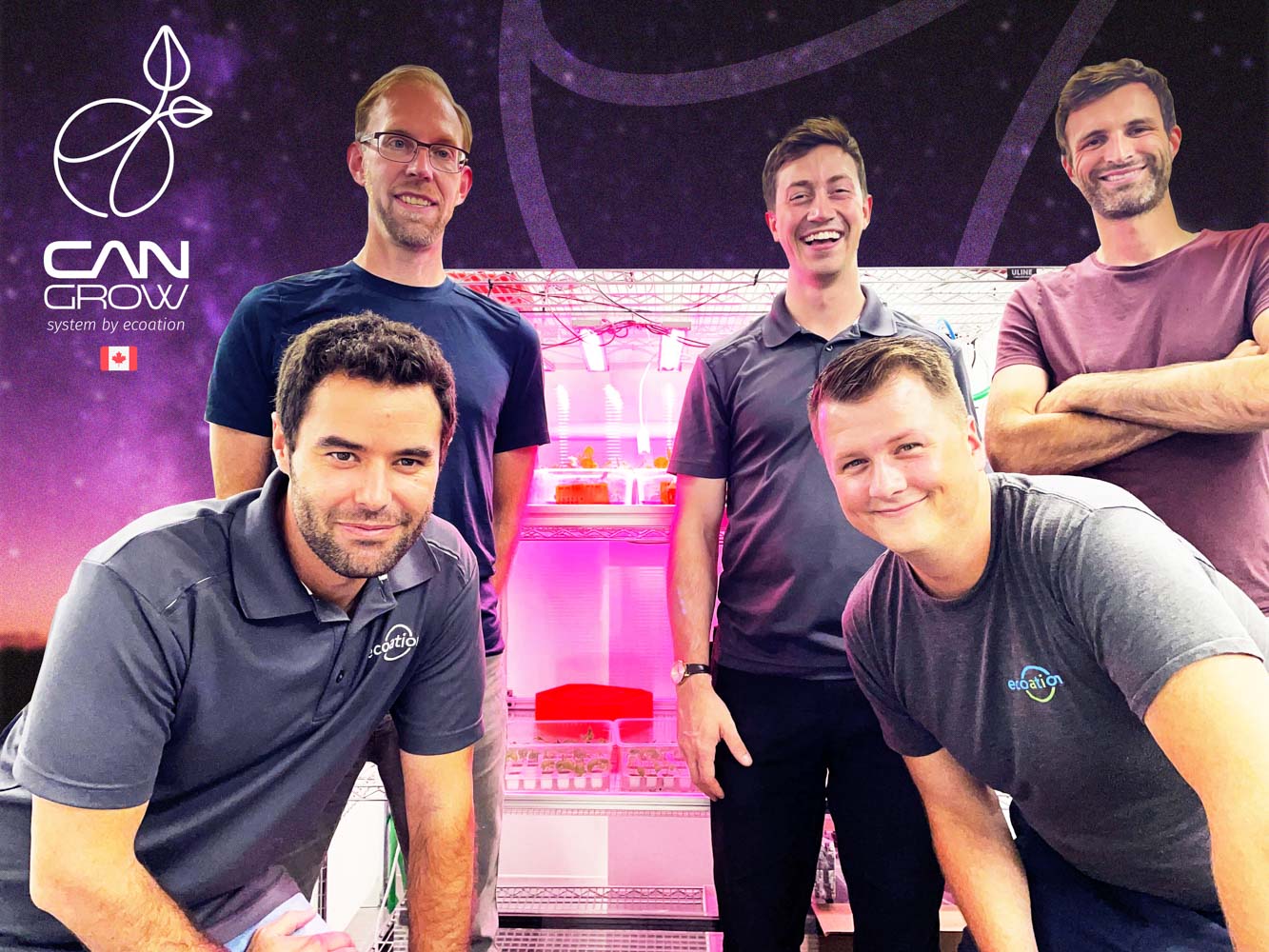
Following a three-year competition, the Canadian Space Agency (CSA) announced Vancouver-based Ecoation Innovative Solutions Inc. (Ecoation) as the winner of the Deep Space Food Challenge. As the Canadian grand prize winner, Ecoation will receive $380,000 for their CANGrow Modular Indoor Food Production System, designed to operate in remote environments like outer space and northern regions.
CANGrow uses an innovative approach to producing a diverse range of fresh foods, including strawberries, cherry tomatoes, mycelial meat substitute, etc. With the potential to generate over 700 kg of nutrient-dense food annually, the system maximizes its produce and high-quality protein sources with minimal resources.
The Deep Space Food Challenge, launched in 2021 in collaboration with NASA and Privy Council Office’s Impact Canada, aimed to develop innovative ways of producing food for astronauts on space missions to the Moon and Mars. Members of the jury highlighted the quality of the projects submitted. These solutions could make a real difference in our capacity to sustain long-duration missions in space, while addressing current food production issues in isolated communities on Earth.
Finalists
Astroyeast Microfarm | Concordia University
Space-adapted Nutrient and Flavour Factory
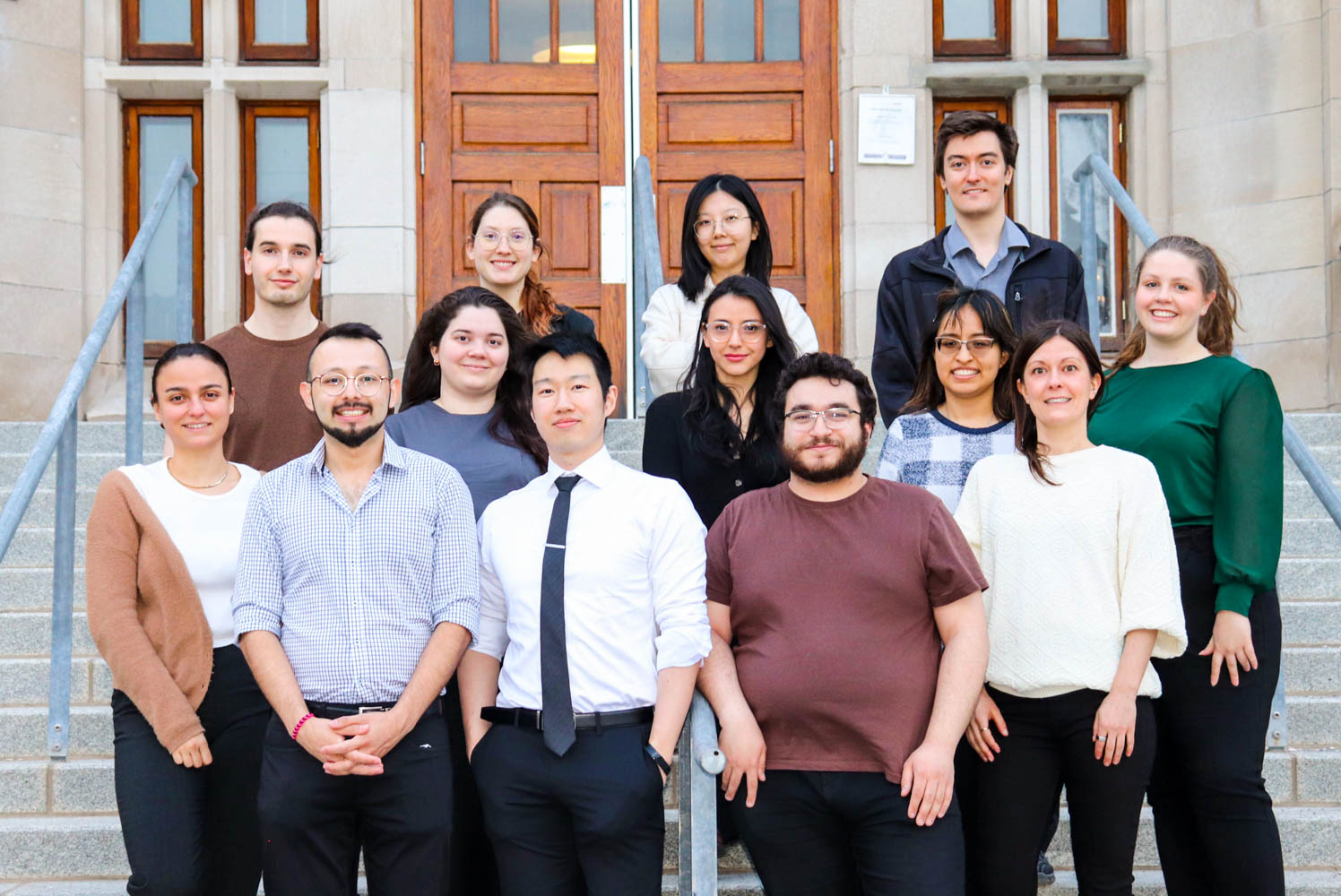
Our food technology is centered around a yeast strain that is specially adapted to the space environment (AstroYeast). The yeast acts as a chassis to produce the nutrients crew members will need for their long voyage to our celestial neighbours, combined with flavour molecules that enhance the dining experience. The production of these nutrients and flavour molecules is performed in an automated and optimized bioreactor system. The end product is a delicious and nutritious yeast spread which can be safely consumed.
Canada GOOSE | University of Guelph
Canada – Growth Options for Outer Space Environments (GOOSE)
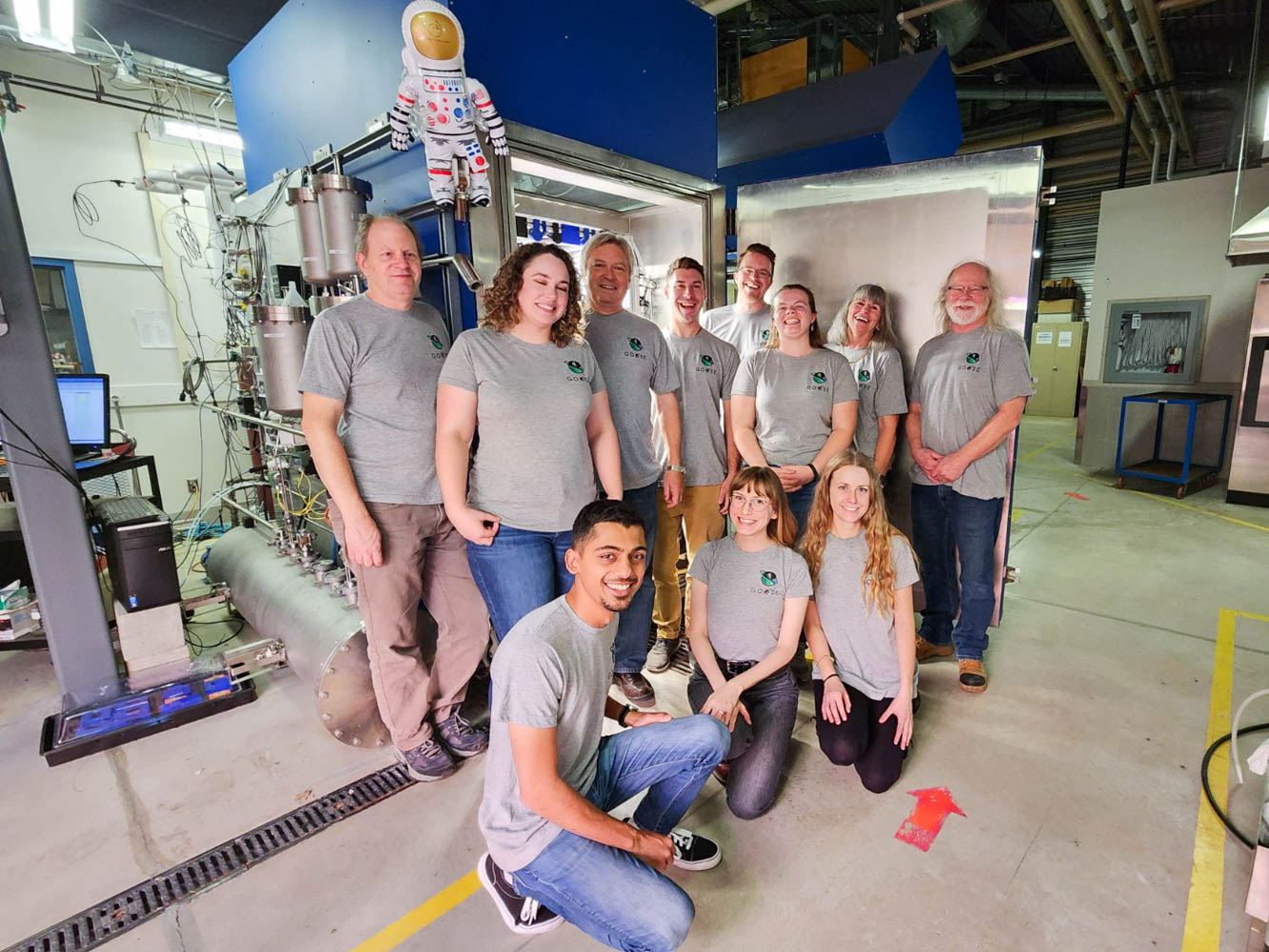
The “Canada GOOSE” is a controlled environment plant growth chamber designed to push the boundaries of high-density crop production yielding a variety of fresh fruits, vegetables, and mushrooms complete with power and water supply. Exploiting uniquely Canadian controlled environment technology and expertise, this design innovates ways to achieve homogeneous conditions within a high-density production system. While meant to address the supply of fresh nutritious food for astronauts, the chamber could be installed in remote areas or harsh environments to improve food security around the world.
Cricket Rearing, Collection, and Transformation System | McGill University / McGill Advanced bio-Regenerative Toolkit for Long Excursion Trips (MARTLET)
Cricket Rearing, Collection, and Transformation System

The Cricket Rearing, Collection, and Transformation System (CRCTS) is designed to be a protein source for astronauts and humans in remote environments on Earth by growing and harvesting protein-rich crickets in a first-of-its-kind controlled environment. Starting with nothing but a few hundred eggs, the CRCTS can quickly support the growth of tens of thousands of crickets every month. The CRCTS uses advanced filters, UVC lamps, and vacuum systems to completely isolate the crickets from the human living environment, ensuring minimal contamination risk throughout all system operations.
Ecoation | Ecoation Innovative Solutions Inc.
CANGrow Modular Indoor Food Production System

CANGrow is a novel modular polyculture indoor food production system that will enable long term space exploration. The CANGrow system incorporates novel technologies in order to offer the widest possible variety of foods with optimal yield. It grows a diversity of biologically efficient food products: strawberries, cherry tomatoes, two root vegetables, microgreens, four unique culinary herbs, mini-head lettuce, an algae superfood, and a mycelial meat substitute - “space bacon”. The technology has the potential to provide over 500kg of nutrient dense food annually.
Semi-finalists
Meet our finalists
Organization |
Project name and description |

Canacompost Systems |
The Outpost: Space Composting With Black Soldier Flies For long duration missions in space, food recycling is a mission-critical problem. Our technology uses black soldier fly (BSF) larvae and microbiota to compost organic material within an automated system, producing nutrient-rich compost, animal protein, fertile insect excrement, heat, and carbon dioxide. These outputs can be utilized within other food-producing systems: the compost and frass as fertilizer, the heat and carbon dioxide within the plant-growing process, and the insects for livestock (or human) consumption. |

McGill University / McGill Advanced bio-Regenerative Toolkit for Long Excursion Trips (MARTLET) |
Cricket Rearing, Collection, and Transformation System The Cricket Rearing, Collection, and Transformation System (CRCTS) is designed to be a protein source for astronauts and humans in remote environments on Earth by growing and harvesting protein-rich crickets in a first-of-its-kind controlled environment. Starting with nothing but a few hundred eggs, the CRCTS can quickly support the growth of tens of thousands of crickets every month. The CRCTS uses advanced filters, UVC lamps, and vacuum systems to completely isolate the crickets from the human living environment, ensuring minimal contamination risk throughout all system operations. |

McGill University / McGill Advanced bio-Regenerative Toolkit for Long Excursion Trips (MARTLET) |
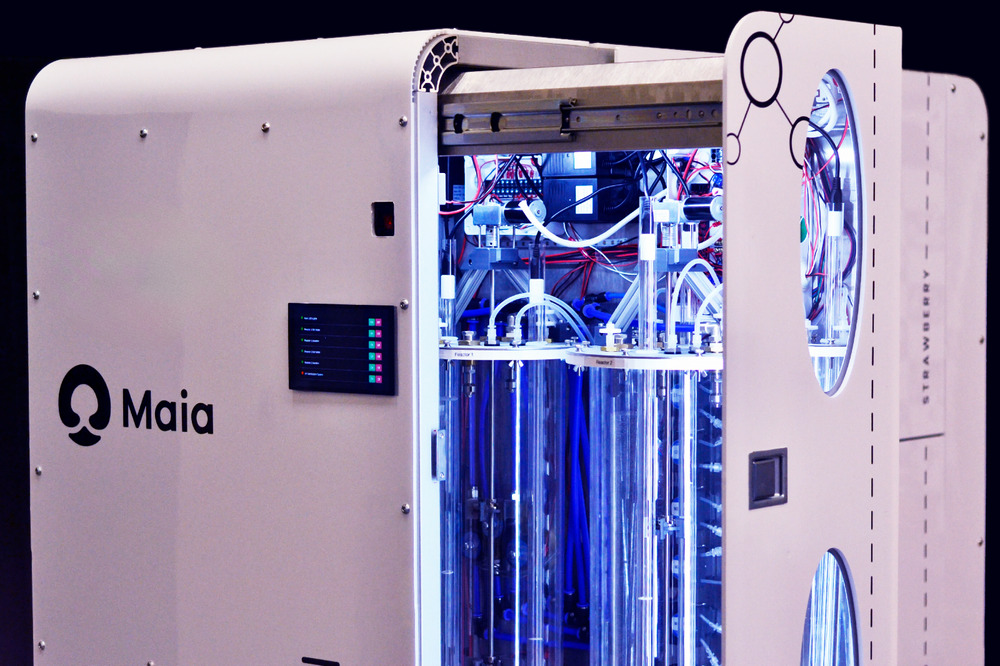
InSpira Photobioreactor InSpira PBR - part of YOUR Green Revolution. The InSpira PBR is novel and modular 6-vessel photobioreactor i.e. a bioreactor with an embedded light source to cultivate microalgae in cartridge vessels. It is coupled with a harvesting and processing unit to transform the culture output into an edible gel that can be consumed as-is or used as a flavouring and dietary supplement when added onto other food products. It will allow operators to produce food in harsh environmental conditions, both in outer space and on earth while minimizing space usage, energy inputs, and skills required. |

AlgaBloom International Ltd. |
A Programmable Microalgae Cultivation Platform for Sustainable Food Production in Space The AlgaSpace cultivation system harnesses the power of microalgae to deliver a sustainable nutrient-rich food supply. It leverages biofilm-based growth for high-density, low-water cultivation of a programmable microalgae to produce foods with different nutrient profiles, flavours and textures including smoothies, pastes, pastas and flakes. The platform not only produces a nutritious food supply but it can also use waste from urination, digestion and respiration as feedstocks for bioproduction thereby closing a sustainability loop necessary for prolonged travel or operations in space. |

University of Waterloo |
Hydrogel Photobioreactors for Cultivation of Food and Life Support The algae rack system is used to cultivate highly nutritional microalgae for human consumption. It minimizes water and energy usage through its innovative design. |

Ecoation Innovative Solutions Inc. |
CANGrow Modular Indoor Food Production System CANGrow is a novel modular polyculture indoor food production system that will enable long term space exploration. The CANGrow system incorporates novel technologies in order to offer the widest possible variety of foods with optimal yield. It grows a diversity of biologically efficient food products: strawberries, cherry tomatoes, two root vegetables, microgreens, four unique culinary herbs, mini-head lettuce, an algae superfood, and a mycelial meat substitute - “space bacon”. The technology has the potential to provide over 500kg of nutrient dense food annually. |

University of Guelph |
Canada – Growth Options for Outer Space Environments (GOOSE) The “Canada GOOSE” is a controlled environment plant growth chamber designed to push the boundaries of high-density crop production yielding a variety of fresh fruits, vegetables, and mushrooms complete with power and water supply. Exploiting uniquely Canadian controlled environment technology and expertise, this design innovates ways to achieve homogeneous conditions within a high-density production system. While meant to address the supply of fresh nutritious food for astronauts, the chamber could be installed in remote areas or harsh environments to improve food security around the world. |

PeaPod Technologies Inc. |
PeaPod PeaPod is a precision-automated plant growth environment for low-maintenance modular food production and distributed research. PeaPod is able to generate any desired environment to grow any crop, while collecting data on plant growth to optimize food products over time via machine learning. The insulated growth environment is extendable and modular, and is easily adapted to suit plant selection and mission requirements. PeaPod uses a set of automated control systems to generate the desired environment, including air thermoregulation, humidification, dehumidification, lighting, and aeroponics. |

Noblegen Inc. |
SEuPS – Space Euglena Production System We will use safe microbes to up-cycle human waste into feedstock for our platform organism Euglena gracilis. Euglena is a robust organism with an amazing nutrient profile that we are already using on earth in future food applications. Our solution is ideal because microbes have an ability to break-down human waste into feedstocks that can be transformed into food using Euglena. We will maximize our efficiency by taking advantage of Euglena’s photosynthetic capacity, and growing microbes in energy efficient bioreactors monitored and controlled by an autonomous AI system. |

Concordia University |
AstroYeast Microfarm: Space-adapted Nutrient and Flavour Factory Our food technology is centered around a yeast strain that is specially adapted to the space environment (AstroYeast). The yeast acts as a chassis to produce the nutrients crew members will need for their long voyage to our celestial neighbours, combined with flavour molecules that enhance the dining experience. The production of these nutrients and flavour molecules is performed in an automated and optimized bioreactor system. The end product is a delicious and nutritious yeast spread which can be safely consumed. |
Stay connected
Send us your questions at: defiael-dsfchallenge@asc-csa.gc.ca.
Join the conversation and get the latest updates on the Deep Space Food Challenge.
Hashtag: #DeepSpaceFoodChallenge
Challenge details
Who can apply?
- Businesses or other for-profit organizations in Canada;
- Not-for-profit organizations in Canada;
- Indigenous organizations and groups located in Canada;
- Post-secondary/academic institutions located in Canada; and
- Individuals or groups of individuals based in Canada.
Individuals or groups of individuals are encouraged to submit an application to the challenge, but in order to be eligible to receive prizes, they will be required to establish a Canadian legal entity (such as a corporation or a not-for-profit organization) capable of entering into binding agreements in Canada.
Key Dates
- Phase 1 – Design Report Deadline: July 30, 2021
- Up to 10 Semi-Finalists Announced: November 9, 2021
- Phase 2 – Kitchen Demonstration Deadline:January 31, 2023
- Up to 4 Finalists Announced: Spring 2023
- Phase 3 – Full System Demonstration Deadline: Winter 2024
- Canadian Grand Prize Winner Announced: Spring 2024
Prizes
- Up to 10 Prizes of CAD $30,000 open to all eligible innovators submitting a Phase 1 concept application.
- Up to 4 Prizes of CAD $100,000 open to all Semi-Finalists participating in Phase 2.
- Grand Prize of CAD $380,000 open to all Finalists participating in Phase 3.
Note: The number of winners and prize amounts may vary depending on the applications received. For each phase, prize amounts will not be less than the amount per winner indicated above.
Publications
Media

Last modified: 2025-02-04