Deep Space Healthcare Challenge
Supporting the healthcare needs of remote communities – both in space and on earth
Introduction
Transcript
Keeping astronauts healthy in space is harder than it looks!
When it comes to medical care, crews on the International Space Station rely heavily on Earth. Health professionals work hard to keep astronauts in tip-top shape, even when they’re floating 400 kilometres above Earth!
But as space travellers gear up to go farther into deep space, they’ll have limited supplies, and less access to help – the same situation faced by Canadians who live far from hospitals, clinics, and typical points-of-care.
Many must travel long distances to get medical treatment and support, an often demanding process.
That’s why the Canadian Space Agency and Impact Canada are launching the Deep Space Healthcare Challenge.
We're looking for new, autonomous solutions to detect and diagnose health issues.
These tools or technologies will not only help tackle healthcare delivery during future space missions…
your great ideas will help here and now, in remote communities across Canada.
To learn more, visit impact.canada.ca.
Keeping astronauts healthy in space is a challenging problem – one that is bound to become more complex as we explore farther away from Earth! The current healthcare system for astronauts is Earth-reliant, with physicians on hand for real-time consultation, resupply trips arriving regularly, and emergency evacuation an ever-present backup. On a trip to Mars however, these systems disappear.
If humans are to go to Mars in the 2030s, we need to find thoughtful solutions that enable them to stay healthy without external support.
Though we may have several years to solve this problem for astronauts, medically-isolated populations including Canadians living in remote communities need these solutions now. These populations experience many of the same barriers found in space, including communication delays and a lack of access to diagnostic tools and specialists. This contributes to uneven access to a range of healthcare supports, and to poor outcomes for the populations affected. Every year, thousands of Canadians need to leave their communities for extended periods to access care that most of us take for granted.


If we can help to identify and develop ideas and solutions that allow practitioners in remote settings to detect and diagnose medical conditions within their communities, we can make an impact in the lives of Canadians today, while setting the stage for deep space missions in the future.
The Challenge
1. Overview
Remote communities and deep space astronauts face many of the same challenges when it comes to healthcare:
- Limited access to specialists or specialized tools
- Delayed or unreliable communications
- Few options for the re-stocking of supplies
- Limits on physical space, resources, and personnel time
While increased connectivity in Canada’s remote communities has helped address some of these issues, the ability to better detect medical concerns early – and to properly diagnose them within the community – is still required.
Practitioners in remote communities and crews on long-duration space flights are in need of tools that give them the autonomy to detect and diagnose medical conditions quickly and efficiently. They need solutions that help them identify concerns early, and they need diagnostics that empower them to make decisions that lead to effective treatment plans and the best patient outcomes.
The Canadian Space Agency – along with supporting partners at Indigenous Services Canada and the CAN Health Network – are looking for innovators to help provide this autonomy with new ideas, or by adapting an existing technology.
2. The Challenge Statement
The Canadian Space Agency is challenging innovators to develop novel diagnostic and detection solutions that can support frontline health workers in detecting or diagnosing medical conditions in remote communities now, and eventually crews on long-duration space missions.
3. Assessment Criteria
In order for a proposed solution to be fully assessed, it must satisfy the following preliminary conditions:
- Relevance to Canadians: The solution supports the detection or diagnosis of a medical condition of importance to remote Canadian communities.
- Relevance to Space: The solution has the potential to support the detection or diagnosis of a medical condition of importance to deep space travel.
- Adaptation for Space: The solution has the potential to be adapted to meet the unique constraints of space flight.
If the above conditions are met, the following criteria will be used to assess an application:
- Effectiveness: Does the solution detect or diagnose medical conditions accurately?
- Autonomy: Does the solution increase the autonomy of the remote healthcare provider by producing actionable information in low-connectivity environments?
- Innovation: Does the solution introduce new ideas or methods, and/or open new opportunities in the remote healthcare sector?
- Ease-of-Use: Does the solution allow generalist, non-physician practitioners to access information at the point-of-care? Is the technology able to be used with minimal operational training?
- Solution Adoption Potential: Is there a plan in place for future technology adoption that accounts for limitations, requirements, and conditions for success of the solution?
- Context Sensitivity: Does the innovator show an understanding of the unique challenges and physical constraints experienced in remote communities?
- Reliability: Does the design show resistance to rough handling or transport and to power/data interruptions? Are the time and skill requirements for ongoing maintenance minimal, or can this be be done remotely?
For detailed information on the assessment criteria, please see the Applicant Guide.
4. Key Dates for the Challenge
- Stage 1: Concept Design – Challenge is launched, and application intake runs until February 1, 2022. Up to 20 Canadian Semi-Finalists with the most promising Concept Report will receive $30,000 each in Spring 2022 and move on to Stage 2.
- Stage 2: Proof-of-Concept – Beginning in Spring 2022, Semi-Finalists will build or modify a proof-of-concept that can generate data in a lab environment. Preliminary data and an in-depth description of the progress will be submitted for evaluation. Up to five Semi-Finalists with the best scores from Stage 2 will receive $350,000 each in Spring 2023 and will move on to become Stage 3 Finalists.
- Stage 3: Prototype Demonstration – Finalists at this stage will build a prototype that will be tested at a demonstration site with the Canadian Space Agency in Fall 2023. One Finalist with the most impressive results from Stage 3 will receive $500,000 in early 2024 and become the Grand Prize Winner for The Deep Space Healthcare Challenge.
Note: The number of winners and the prize amounts may vary depending on the applications received. For each stage, prize amounts will not be less than the amount per winner indicated above.
5. Who Can Apply to the Challenge
The Deep Space Healthcare Challenge is open to applications from all Canadians. Specifically, you can apply if you are a:
- Business or other for-profit organization in Canada
- Not-for-profit organization in Canada
- Indigenous organization or group located in Canada
- Post-secondary/academic institution located in Canada
Individual or group of individuals based in Canada Individuals or groups of individuals are encouraged to submit an application to the Challenge, but in order to be eligible to receive prizes, they will be required to establish a legal entity (such as a corporation or a not-for-profit organization) capable of entering into binding agreements in Canada.
Please review the Applicant Guide in detail to confirm your eligibility before preparing and submitting your concept application.
Process & Prizes
-
Stage 1 – Challenge Launch and Design Application Intake
November 30, 2021 – February 1, 2022
Applicants with a design for a remote healthcare technology concept are invited to apply to the Challenge. The deadline to apply is February 1, 2022 at 9:00 pm Eastern Time. At this stage, applicants are competing for $30,000 in grant funding and the opportunity to become a Semi-Finalist in Stage 2 of the challenge.
-
Stage 2 – Up to 20 Semi-Finalists Will Develop a Proof-of-Concept
Spring 2022
Up to 20 of the most promising designs will be selected to participate in Stage 2 of the Challenge. These Semi-Finalists will have 10 months to build a proof-of-concept (minimum of TRL 4 ) and to provide data to the judging panel for evaluation. Semi-Finalists are competing to be among the five Finalists who will receive $350,000 in grant funding and move on to Stage 3 of the Challenge.
In addition to the monetary awards, Semi-Finalists will be provided with the following supports to ensure that their designs meet the needs of the Challenge:
Consultation with an ISC Community Advisor to provide first-hand context of the needs and challenges faced by remote community healthcare practitioners.
Session with a regional health authority to provide insight into the needs and concerns of these groups.
Access to a virtual workshop that will cover common failure points for healthcare technology development, such as regulatory considerations, intellectual property management, and business strategy development.
-
Stage 3 – Up to 5 Finalists Will Build a Prototype for Demonstration
Winter 2023
The five Finalists who moved on from Stage 2 will build a prototype (minimum of TRL 6 ) which will be demonstrated in Fall 2023 at a simulated remote environment setup by the CSA. Teams will also be asked to provide a plan for future development and adoption of the demonstrated technology. Finalists at this stage are competing to become the Grand Prize Winner who will receive $500,000 in grant funding.
In addition to the monetary awards, Finalists will be provided with the following supports to maximize the impact of their technologies:
Connection to CAN Health Network’s industry partners, mentors and advisors to discuss the technology’s commercial adoption.
Direct connection to the National Research Council of Canada’s Industrial Research Assistance Program (NRC IRAP).
Potential for continued input from ISC Community Advisors or focus groups.
-
Canadian Grand Prize Winner Selected
Winter 2024
A Canadian Grand Prize Winner will be selected from among the Finalists and announced in Winter 2024.
Up to 20 Prizes of $30,000
Open to all eligible innovators submitting a Stage 1 concept application.
Up to 5 Prizes of $350,000
Open to all Semi-Finalists participating in Stage 2.
Grand Prize of $500,000
Open to all Finalists participating in Stage 3.
Note: The number of winners and the prize amounts may vary depending on the number of applications received. For each stage, prize amounts will not be less than the amounts indicated above.
Jury

David Saint-Jacques
Canadian Space Agency Astronaut
-
Full bio
Engineer, astrophysicist, physician and pilot, David Saint-Jacques is an astronaut with the Canadian Space Agency. He is married and has three children.
Prior to joining the Canadian space program, he was practising medicine in Inuit communities overlooking Hudson Bay.
He was selected in 2009 and joined the 20th NASA astronaut class. Upon completion of training, he held various operations, planning and support functions for NASA’s Mission Control Center and Astronaut Office.
In 2018, David flew as co-pilot of the Soyuz MS-11 rocket to the International Space Station, where he lived 204 days and worked as flight engineer and crew medical officer of Expedition 58/59. There he conducted numerous scientific experiments, performed a spacewalk and used Canadarm2 to berth a visiting spacecraft.

Dr. Shannon McDonald
Acting Chief Medical Officer at the First Nations Health Authority
-
Full bio
Dr. Shannon McDonald, proudly Metis/Anishinabe with deep roots in the Red River Valley of Manitoba, is the Acting Chief Medical Officer at the First Nations Health Authority. Dr. McDonald is a trained physician, with post-graduate medical training in Community Medicine and Psychiatry, and has worked for over 25 years in the area of First Nations and Aboriginal Health. Dr. McDonald has extensive experience both in the federal and provincial government contexts. As an influential leader, Dr. McDonald was awarded BC’s Physician Champions of Change award by the Doctors of BC for her leadership and advocacy for physician services in BC’s rural and remote First Nations communities.

Diane Côté
Chief Executive Officer at MEDTEQ+
-
Full bio
Diane Côté is the CEO of MEDTEQ+, an industry-led consortium accelerating the development of innovative healthcare solutions through collaborative projects and through investments in leading Canadian SMEs. She is a member of the Executive Committee of the Digital Health and Discovery Platform/DHDP, led by Imagia and the Terry Fox Research Institute. She is a member of the Steering Committee of the Trans-MedTech Institute and a member of the Innovation Working Group of the Healthy Brains for Health Lives/HBHL initiative.
Diane was a member of the Advisory Council on Deep Space Healthcare of the Canadian Space Agency. She was also Vice-President of the Board of Directors of the Fonds de Recherche du Québec – Santé (FRQ-S). She has been a member of the Life Sciences Advisory Group of Global Affairs Canada and was a member of the Board of AlterGo, a non-profit organisation supporting social inclusion. Diane was previously Vice-President-Quebec of Medtech Canada. During her work in industry, she was the CEO of a healthcare technology company specialising in AI/neural networks for clinical risk management tools. She held various management assignments at IBM Canada. She also led mandates in strategic planning, financing and partnerships at Innovitech, a strategic broker in the development of innovative economic and business models.

Elissa Strome
Executive Director of the Pan-Canadian Artificial Intelligence Strategy at CIFAR
-
Full bio
Elissa Strome is the Executive Director of the Pan-Canadian Artificial Intelligence Strategy at CIFAR. She works with leaders at Canada’s three national AI Institutes in Edmonton (Amii), Montreal (Mila), and Toronto (Vector Institute) and across the country to advance Canada’s leadership in AI research and innovation. She is a champion for Canada’s position in AI research, innovation, and policy internationally. Elissa is a member of the federal government’s AI Advisory Council, the Joint Ministers’ (Ontario) Roundtable on AI and health data, and the OECD Network of Experts on AI.
Elissa completed her PhD in Neuroscience from the University of British Columbia. Following a post-doc at Lund University, in Sweden, she decided to pursue a career in research strategy, policy and leadership. From 2008 – 2017 she held senior leadership positions at University of Toronto's Office of the Vice-President, Research and Innovation, advancing major institutional strategic research priorities, including establishing and leading the SOSCIP research consortium.

Mark Casselman
Chief Executive Officer – Digital Health Canada
-
Full bio
Mark Casselman is Chief Executive Officer of Digital Health Canada, the national association that connects, inspires, and educates the digital health professionals creating the future of health in Canada. Digital Health Canada members are a diverse community of accomplished, influential digital health professionals who work passionately to make a difference in advancing healthcare through information, technology, and data management. Mark is a health executive and advisor with 20 years of experience working with executives, entrepreneurs, and clinical leaders across sectors within the Canadian health ecosystem. He has led large-scale transformation initiatives and has been recognized as an innovator in the field of digital health. Mark has a proven track record of working with public sector, private sector, and government stakeholders and integrating both shared and different perspectives to achieve success.

Dr. James Rourke
Professor Emeritus and former Dean of Medicine at Memorial University of Newfoundland
-
Full bio
Dr. James Rourke is Professor Emeritus and former Dean of Medicine at Memorial University of Newfoundland. Dr. Rourke grew up on a farm in rural Ontario and attended a one-room public school. He graduated MD from the University of Western Ontario and completed Family Medicine training. Dr. James Rourke was a rural generalist family physician in Goderich, ON for 25 years with his wife and partner, Dr. Leslie Rourke. His practice included care for patients in their office, on house-calls, in the nursing home and the hospital including emergency work and obstetrics, attending 740 births. This provided a lived-experience foundation for a lifetime of rural medicine and medical education leadership in Canada and around the world. He remains active in retirement providing sought after advice on rural health, health care restructuring, medical education and research. Dr. Rourke has had over 120 medical journal articles and textbook chapters published. ORCID 0000-0001-8019-0294

Joe Cafazzo, PhD Peng
Wolfond Chair in Digital Health and Lead at eHealth Innovation at the University Health Network
-
Full bio
Dr. Joseph Cafazzo is the inaugural Wolfond Chair in Digital Health and Lead at eHealth Innovation at the University Health Network. As a biomedical engineer, Dr. Cafazzo observes healthcare delivery from the inside-out and works on ways to keep people out of hospital by creating technologies that allow for self-care at home.
Over time he has built an intricate network of clinicians, designers, engineers, researchers, that challenge the norms of healthcare and enable patients and their families. Together they push the boundaries of what’s possible, which has led to the creation of technologies that act to facilitate patient self-care of complex chronic conditions such as diabetes, asthma, end-stage renal disease and congestive heart failure.

Leila Gillis, RN MN FCAN
Deputy Chief Nursing Officer and Senior Director of Primary Care Services at Indigenous Services Canada
-
Full bio
Leila Gillis RN MN FCAN is a federal government nurse leader and her career has been dedicated to service to Indigenous populations at the local, provincial, regional, and national levels, influencing healthcare delivery over three decades.
As Deputy Chief Nursing Officer and Senior Director of Primary Care Services at Indigenous Services Canada, Gillis leads the national policy direction for the departments remote urgent, emergent and primary care services across Canada and continues to work to meet Canada’s commitment to support First Nations and Inuit full ownership and control of health services. Gillis’ career was built on a foundation of front line practice in both Inuit Nunangat and First Nation communities and this experience has solidified her commitment to support health system change.
Gillis is a member of the Federal/Provincial/Territorial Principle Nursing Advisors Task Force and has joined international delegations representing Canada at meetings of the International Council of Nurses and the World Health Organization.

Dr. Shaan Chugh, MD FRCPC MSc
Medical Director of Solutions at Trillium Health Partners
-
Full bio
Dr Shaan Chugh is an Internal Medicine physician currently practicing at Trillium Health Partners, one of the largest hospital organizations in Canada, as well as at Cleveland Clinic Canada in Toronto. He has been deeply invested in the COVID-19 response, both on the frontlines since the start of the pandemic, and as the Medical Director of the Assessment Centres at Trillium Health Partners.
Through Cleveland Clinic Canada’s Advisory Services program, Dr Chugh also serves as the Chief Medical Director for Purolator, a leader in Canada’s premium courier industry. He has been critical in leading the pandemic response and preparation at Purolator. In addition to these pursuits, Dr Chugh has also assumed the role of Medical Director of Solutions at Trillium Health Partners, where he oversees the CAN Health Network, Insight Health Solutions, and the Institute for Better Health driving innovation and ensuring high quality care.

Isabelle Lusseyran
Best Practices, Innovation and Telehealth Advisor at the Montreal Heart Institute
-
Full bio
Isabelle Lusseyran is passionate about health innovation, and holds a Master of Science in Management, with a specialization in health and therapeutic innovation. She has worked in the private sector, in hospitals, and with not-for-profits, where she has filled a variety of roles, from project and partnership management to organizing and leading innovation workshops and competitions. In addition, she also regularly mentors entrepreneurs.
For nearly 4 years Isabelle was Director of Partnerships at Hacking Health, an international organization that promotes collaboration between various healthcare stakeholders in order to generate innovative solutions to healthcare challenges.
Since 2019, Isabelle has been the Best Practices, Innovation and Telehealth Advisor at the Montreal Heart Institute, where she has spearheaded the development and use of telehealth technologies and practices to improve access to healthcare services.

Marina Massingham
President and CEO Aifred Health
-
Full bio
Marina discovered her love of entrepreneurship on moving to Canada in 2013, having previously spent her career overseas at Novartis, Cadbury, and management consulting firm Kaiser Associates. She co-founded Canadian specialty pharmaceuticals startup TeOra Health, with successful exit in 2015, and joined Aifred Health as professional CEO in early 2019.
Having witnessed a close family member’s struggles with mental health, Marina is passionate about Aifred’s mission of advancing AI in clinical decision support for mental health, with the goal of significantly improving quality and efficiency of care provision, and outcomes for patients.
In 2021, Aifred Health placed #1 in North America and #2 in the World in the $5M IBM Watson AI XPRIZE with its AI model for treatment selection in depression.
Results
MD Applications has been selected as the winner of the Deep Space Healthcare Challenge!
Following a competition spanning over two years, the winner of the Deep Space Healthcare Challenge, run by the Canadian Space Agency and Impact Canada, has been selected. Montreal-based MD Applications will receive $500,000 in grant funding as the grand prize winner. Their EZResus solution is already helping save lives on Earth and holds great potential for diagnosis and medical emergencies in space.
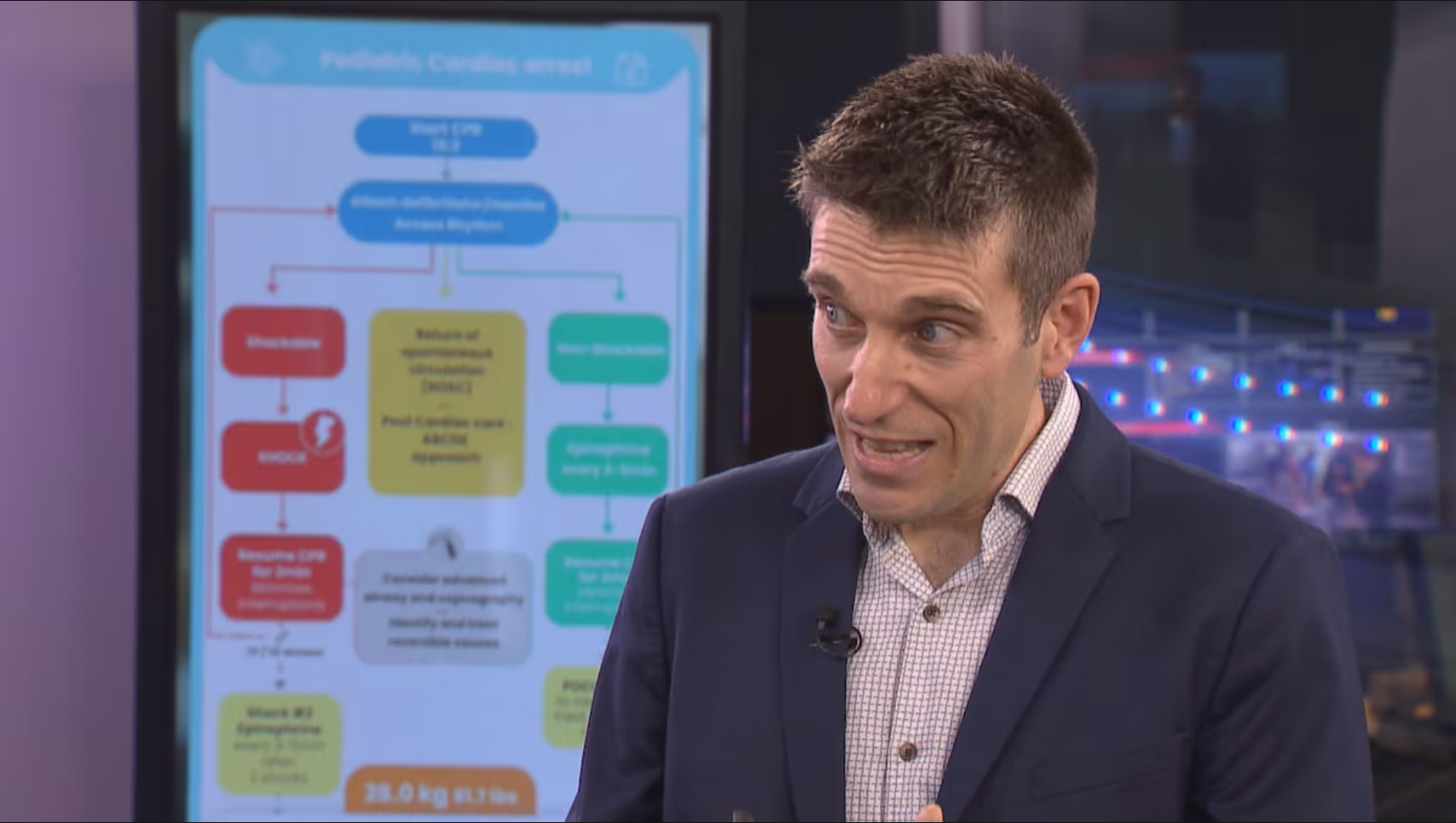
EZResus is an application that streamlines the information needed by emergency personnel in the critical first hour of resuscitation: from diagnosis to required drug dosage and equipment. During the final demonstration to the jury, the team proved how complex calculations and interventions can become increasingly challenging under the pressure of a life-threatening situation.
The Deep Space Healthcare Challenge was created to support healthcare needs of astronauts in space and, in turn, people living in remote communities. Members of the jury were impressed by the quality of the projects presented by all five finalists, which highlighted the innovative spirit of the Canadian medical technology sector. These solutions could contribute in a meaningful way to medical detection and diagnosis and pave the way for contributions to future human space exploration missions.
Finalists
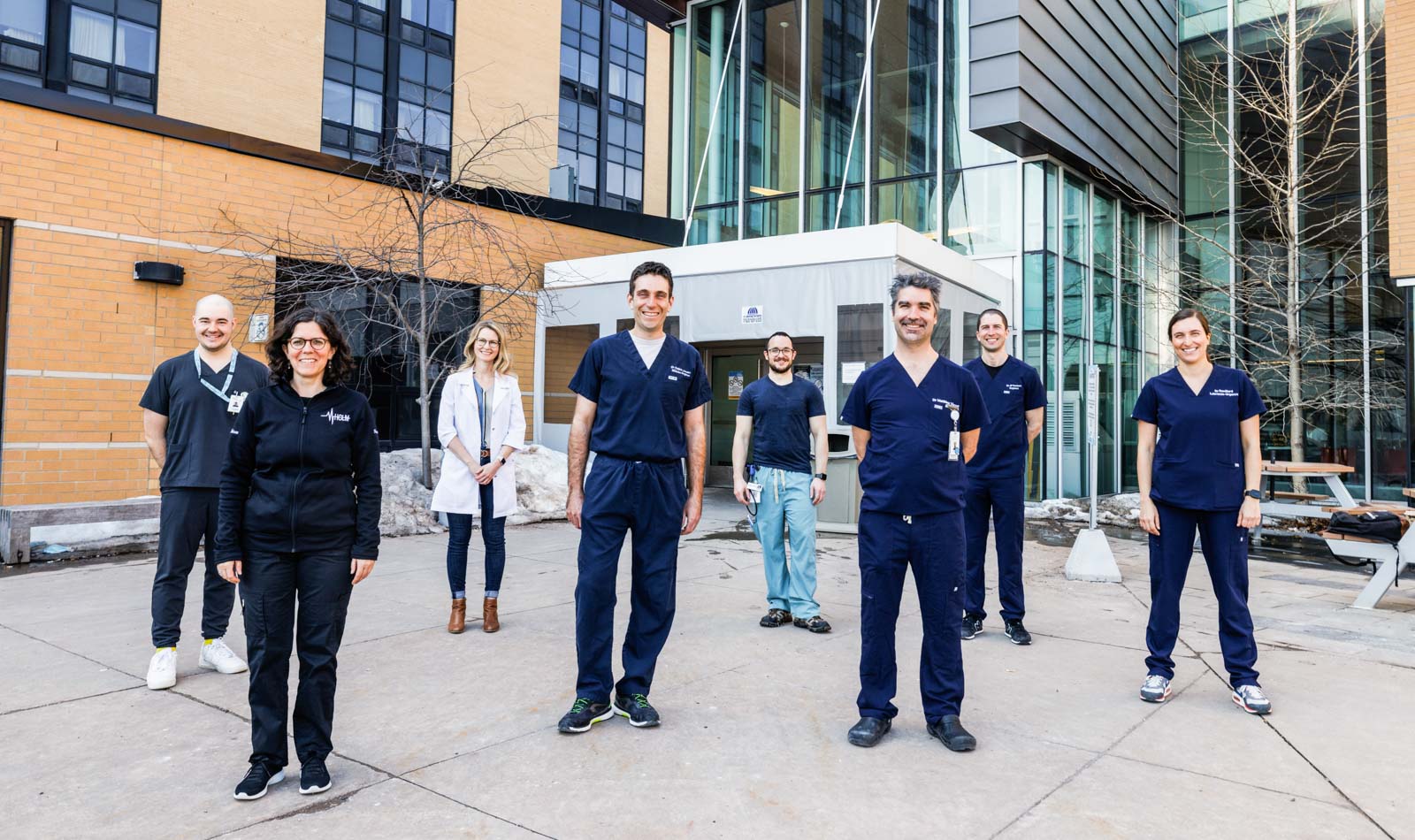
Applications MD
EZResus
EZResus, a mobile application for resuscitation that supports people in the field
Centre for Surgical Invention and Innovation (CSii)
Development of an Autonomous and Tele-operable Medical Robot for Ultra Rapid Screening, Diagnosis and Treatment of Early Cancers and Other Needlescopic Interventions
We will build an autonomous robotic system capable of screening, point of care diagnosis and treatment of early cancers that can be operated remotely or with no human interaction, when required.

IndigenousTech.ai
AI-powered Solution for Dermatology for Primary Care Practices in Remote Communities
Autonomous AI-driven software and an imaging device attachable to a smartphone for remote monitoring and diagnosis of skin conditions under remote supervision of a specialized dermatologist.

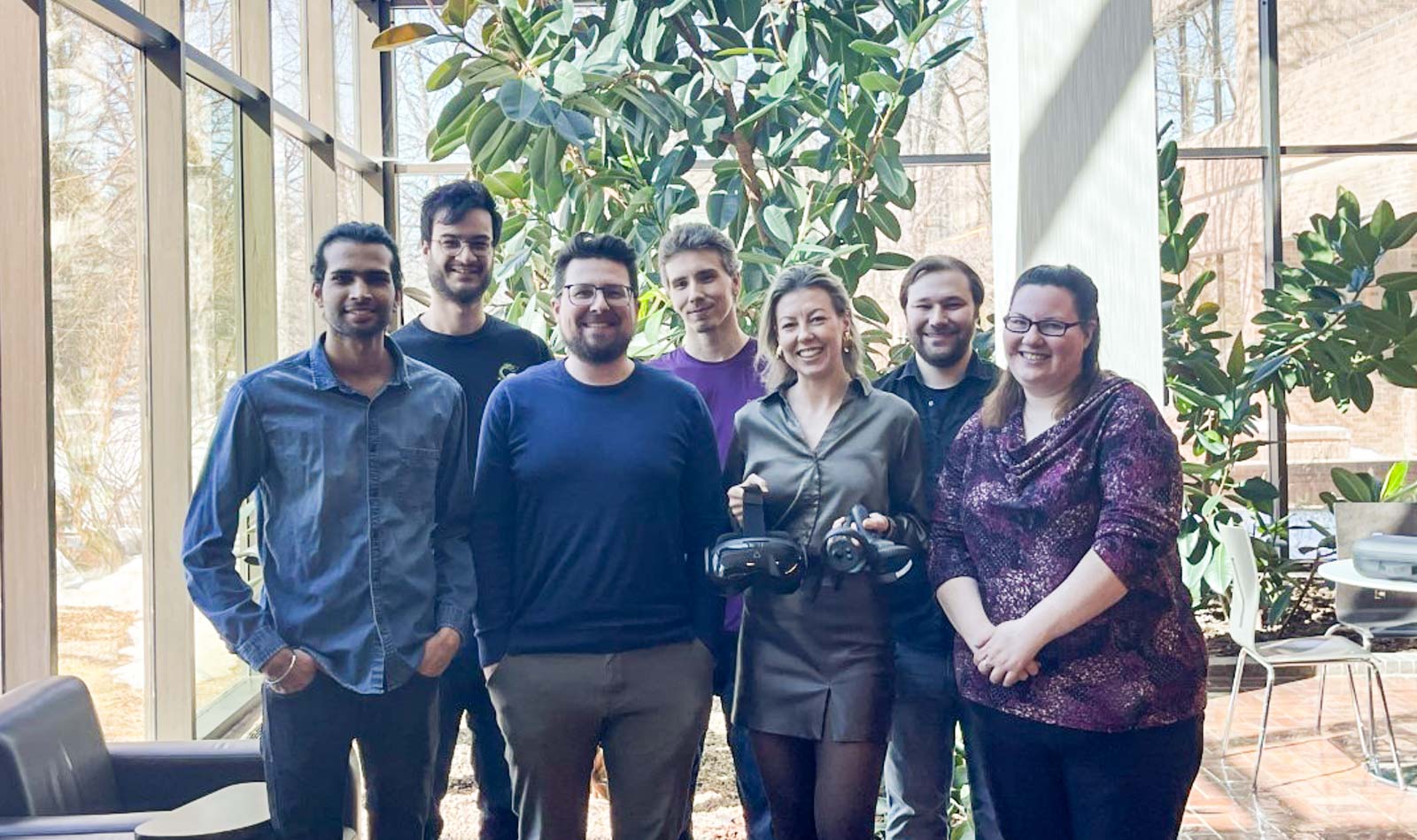
Luxsonic
SieVRt Cardiac
An extended reality platform for remote radiology and the diagnosis and monitoring of cardiovascular disease.
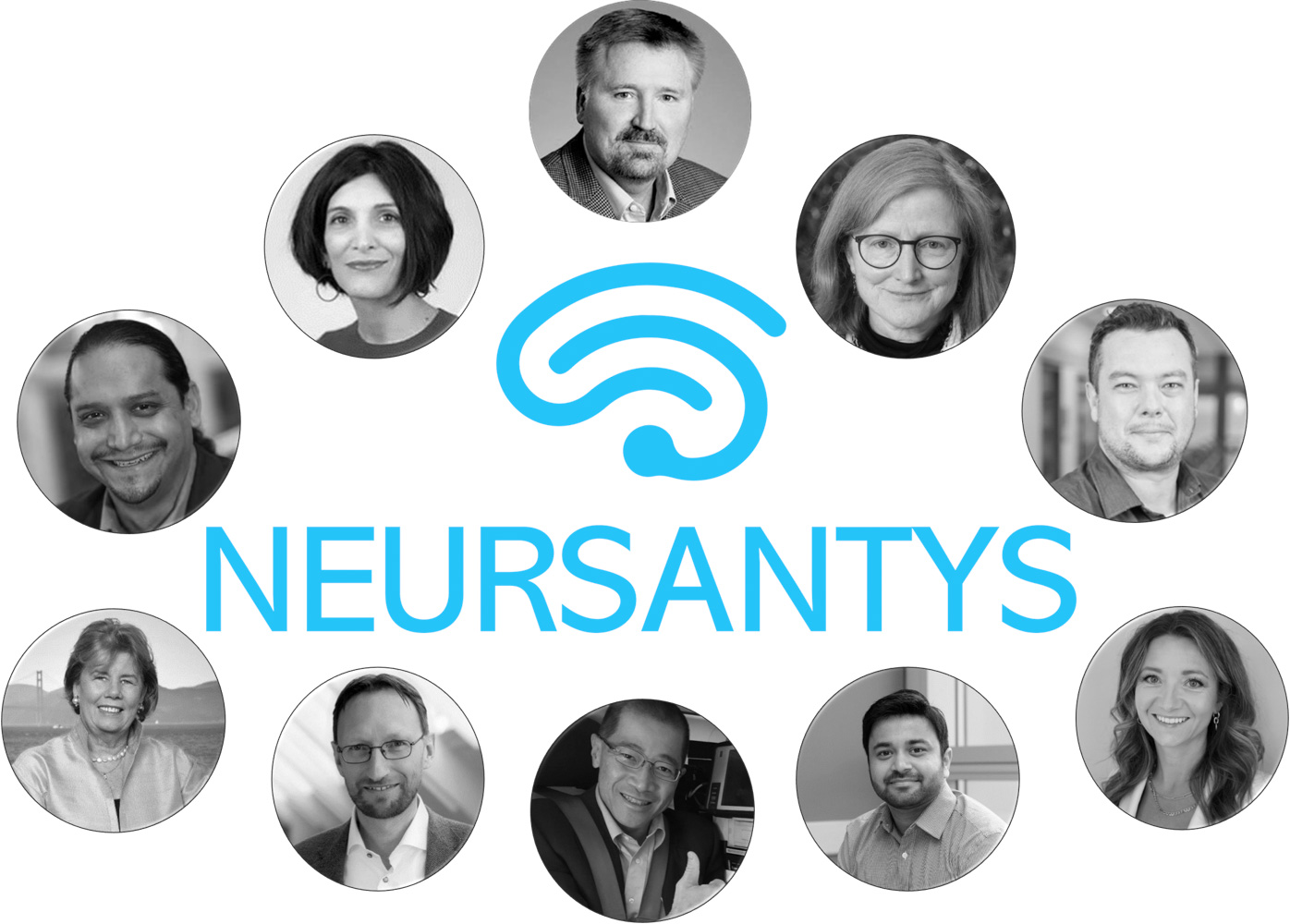
Neursantys
NEURVESTA: Remote management of neurovestibular and sensorimotor disruptions
The NEURVESTA wearable device enables remote detection and correction of neurovestibular and sensorimotor disruptions caused by aging, injuries, disease, and exposure to microgravity environments.
Semi-finalists
Organization |
Concept Design Title |

ADGA Group Consultants Inc. |
AI-Powered Virtual Medical Assistant ADGA proposes to develop a Virtual Assistant designed to provide healthcare practitioners with AI-enabled guidance for the purpose of performing live medical procedures, or obtaining JIT training. |

Alentic |
Lensless Microscopy Diagnostic Platform Alentic has developed a proprietary lensless microscopy-based handled diagnostic platform that simultaneously performs multiple blood tests from single pinprick blood samples by untrained users. |

Applications MD |
EZResus EZResus, a mobile application for resuscitation that supports people in the field |

Centre for Surgical Invention and Innovation (CSii) |
Development of an Autonomous and Tele-operable Medical Robot for Ultra Rapid Screening, Diagnosis and Treatment of Early Cancers and Other Needlescopic Interventions We will build an autonomous robotic system capable of screening, point of care diagnosis and treatment of early cancers that can be operated remotely or with no human interaction, when required. |

IndigenousTech.ai |
AI-powered Solution for Dermatology for Primary Care Practices in Remote Communities Autonomous AI-driven software and an imaging device attachable to a smartphone for remote monitoring and diagnosis of skin conditions under remote supervision of a specialized dermatologist. |

LightX Innovations Inc. |
LightX Innovations – Vision diagnostics LightX is an innovative medical tool for artificial intelligence (AI) diagnostics and a platform that opens telemedicine to the field of eye care and ophthalmology. |

Luxsonic |
SieVRt Cardiac An extended reality platform for remote radiology and the diagnosis and monitoring of cardiovascular disease. |

McMaster University |
Heart-Tracker: A wearable platform for real-time monitoring of cardiac markers in interstitial fluid We propose to develop a wearable patch with non-invasive microneedles that will monitor cardiac biomarkers in interstitial fluid in real-time and could later be used to monitor other key biomarkers. |

Neursantys Inc. |
NEURVESTA: Remote management of neurovestibular and sensorimotor disruptions The NEURVESTA wearable device enables remote detection and correction of neurovestibular and sensorimotor disruptions caused by aging, injuries, disease, and exposure to microgravity environments. |

Optican Systems Inc. |
The OptiScan Near Infrared Probe for real-time Health Monitoring The OptiScan is handheld diffuse optical Near-Infrared probe for breast cancer detection. It can also be utilized to identify areas of hypoperfusion in cardiovascular disease and assess bone loss. |

Pelican MRI |
Ultralight MRI for Remote and Isolated Communities We will build robust ultralight head size MRIs to start with, moving to ultralight body size MRIs as we gain experience; our MRIs are easily 10 times lighter than existing MRIs. |

PLAKK |
Saving Lives One Scan at a Time: An Artificial Intelligence-Powered Ultrasound Guidance and Analysis Tool to Predict Stroke Risk Our artificial intelligence-powered software guides healthcare providers in performing high-quality ultrasound exams of the neck arteries, and automatically quantifies key measures of stroke risk. |

Pulsence |
Pulsence A compact pulsed near-infrared light probe for non-invasive imaging of the spaces between the skull and the brain to improve the diagnosis of brain injuries. |

Sonoscope Inc |
Hands-free automated ultrasound diagnosis module We are developing an automated data acquisition technology to enable quick, effective intervention by personnel who do not have advanced medical training. |

Swift Medical |
Pocketable, Skin and Wound Diagnostic and Monitoring Solution Pocketable, early detection and diagnostic solution that enables patients and frontline healthcare providers to autonomously identify, manage and monitor skin/wound conditions in remote communities. |

Texavie |
Autonomous, Comfortable, Health-Sensing and Therapy MarsWear Apparel For Deep Space and Remote Terrestrial Applications MarsWear intelligent apparel with embedded sensors detect joint movements, muscles and physiological parameters for creating remote personalized health diagnosis and therapy feedback. |

Tidal Medical |
Remote Detection of Respiratory and Cardiac Pathology using a Non-Invasive Diagnostic Wearable Tidal Medical has developed a wearable remote diagnostic and management tool that assesses respiratory and cardiac function using a non-invasive, non-ionizing imaging modality. |

Université de Montréal |
SPRINT - Surface plasmon resonance intelligent nanosensor technology Our proposal is to develop a versatile, miniature technology to detect biological markers (proteins and antibodies) in urine and blood for medical monitoring. |

University of New Brunswick |
An electrochemical sensor for rapid cancer biomarker detection We aim to exploit portable an electrochemical biosensor platform for rapid, point-of-care screening of selected cancer biomarkers. |

Wosler Corp. |
Autonomous Diagnostic Ultrasound Services in Deep Space and Remote Communities. We are developing an autonomous solution to enable patients in remote communities and in deep space to have access to diagnostic quality ultrasound, and to address the problem of sonographer shortage. |
Stay connected
Use the hashtag #DeepSpaceHealthcareChallenge to join the conversation and get the latest updates on the Challenge. You can also email us at defisante-healthchallenge@asc-csa.gc.ca and we will get back to you within five business days.
Challenge details
Who can apply?
- Businesses or other for-profit organizations incorporated in Canada;
- Not-for-profit organizations registered in Canada;
- Indigenous organizations and groups located in Canada;
- Post-secondary/academic institutions located in Canada; and
- Individuals or groups of individuals located in Canada.
Individuals or groups of individuals are encouraged to submit an application, but will be required to establish a Canadian legal entity in order to be eligible to receive prizes.
Prizes
- Up to 20 prizes of $30,000 open to all eligible innovators submitting a Stage 1 concept application
- Up to 5 Prizes of $350,000 open to all Semi-Finalists participating in Stage 2
- Grand Prize of $500,000 open to all Finalists participating in Stage 3
Note: The number of winners and prize amounts may vary depending on the applications received. For each stage, prize amounts will not be less than the amount per winner indicated above.
Key Dates
- Stage 1 – Design Report Deadline: February 1, 2022
- Up to 20 Semi-Finalists Announced: April 2022
- Stage 2 – Proof-of-concept Deadline: January 2023
- Up to 5 Finalists Announced: April 2023
- Stage 3 – Prototype Demonstration Deadline: Fall 2023
- Grand Prize Winner Announced: Spring 2024
Publications

Media
Last modified: 2025-01-26