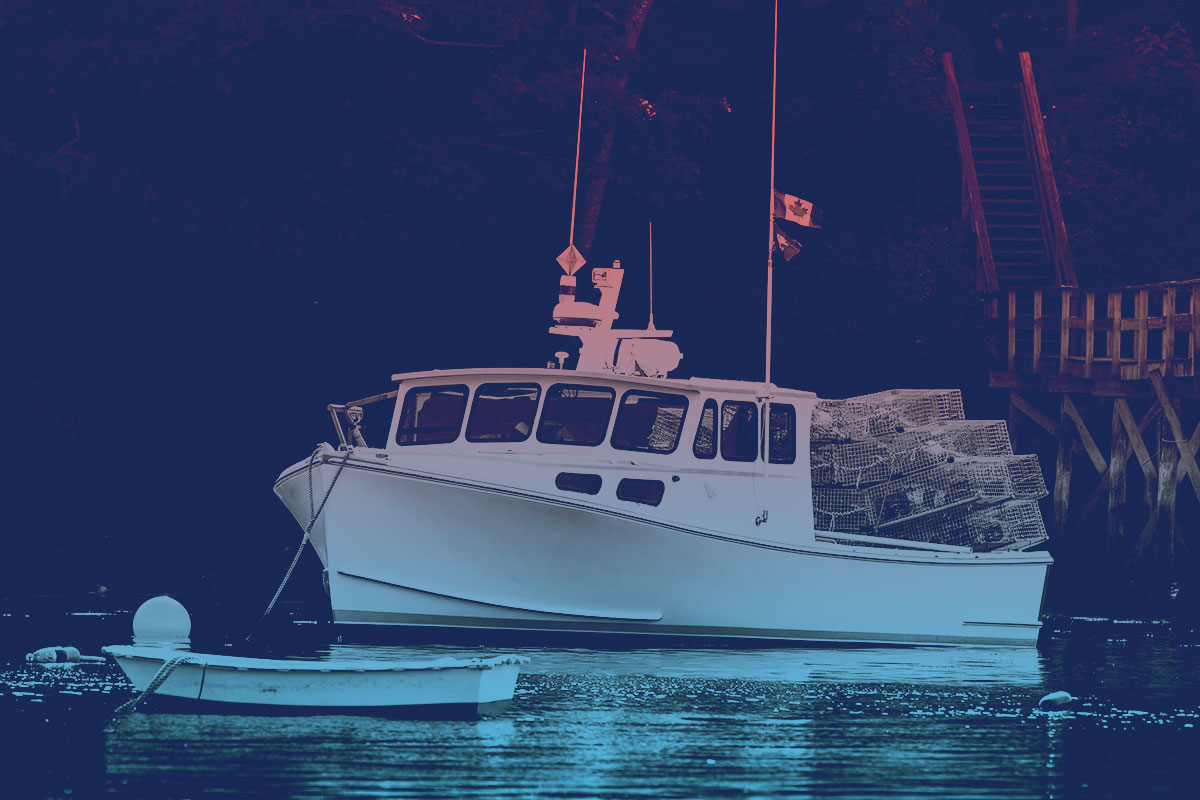
Hull Design Efficiency Challenge
Fostering boat design innovation to promote economic growth and protect the environment
Introduction
The results are in!
Transcript
[Henry Demone, Chair, Hull Challenge Selection Jury]
The Atlantic coast fishery has thousands of inshore vessels and coming up with a more efficient design can make the fishermen more efficient, more productive and lower their carbon footprint at the same time.
There’s one winner…that gets half a million dollars, which is a very lucrative prize. But also, uh, I believe that the competition itself is going to create a lot of collaboration, even for those firms that don’t win…naval architects and engineers, ship builders, fishing industry…and that collaboration I think is going to be very helpful on an ongoing basis even for those firms, you know, that aren’t chosen as the winner.
I’ve been impressed with the quality of the submissions and I think that we’re going to have an innovative vessel design that will lower the greenhouse gas emissions of the Atlantic fishery.
And then you’ve got a diverse group of Jury members, each of who bring a different perspective, so we get into a number of healthy debates. The goal is to come up with the best answer out of those debates.
[White text on top of Hull Challenge graphic : ACOA Hull Design Efficiency Challenge – Grand Prize winner announced Winter 2021]
[Black text on white background: #HullFishNSeaChallenge]
[Canada wordmark]

The Atlantic Canada Opportunities Agency is challenging boat builders to develop an innovative hull that maximizes energy efficiency, lowers operational costs and reduces greenhouse gas emissions.
The Hull Design Efficiency Challenge will:
- encourage out-of-the-box thinking when designing fishing boat hulls
- fuel innovation in the boatbuilding industry
- reduce the amount of fuel used to move a fishing boat through the water:
- Less fuel = lowers operating costs for boat owners
- Less fuel = less greenhouse gases (GHGs) emitted into the atmosphere
- Less GHGs = cleaner environment for everyone
Background
Atlantic Canada is home to nearly 13,000 inshore fishing boats that use diesel fuel to power them to lucrative fishing grounds on the East coast. Boatbuilding and the commercial fishery are important economic drivers in the rural communities that dot the region’s coastline. The landed value of catches in 2017 accounted for just over $3 billion in the Atlantic region economy.
Why focus on boat hulls?
A hull is one of the most important parts of a boat because it has direct contact with water. The shape of a boat’s hull determines the amount of drag (pull) and how the boat will handle at different speeds and in different water conditions. A more efficient hull has less drag and uses less fuel to move the boat forward in the water.
The hull designs submitted in this Challenge must:
- meet the needs of the Atlantic Canadian inshore fishing industry (boats under 15 m/50 ft)
- focus on innovations to hull design while keeping the rest of the boat largely unchanged
- meet relevant Canadian and provincial regulations for commercial fishing vessels
The Challenge
Challenge Statement
The Hull Design Efficiency Challenge aims to develop an innovative hull design that meets the needs of the Atlantic inshore fishery, maximizes energy efficiency, lowers operational costs and reduces greenhouse gas emissions.
Challenge Objectives: Play a part in growing and greening Atlantic Canada...
ACOA is challenging interested applicants to design an innovative fishing boat hull that will:
- Lower operational costs – fishing boats will use less fuel to accomplish the same amount of work, lowering costs and increasing profits.
- Maximize energy efficiency – inshore fishing vessels will be able to do more work using less fuel.
- Reduce greenhouse gas emissions – using less fuel means fisheries activities will generate less greenhouse gases and pollution, contributing to a cleaner, healthier Atlantic Canada for everyone.
Who Can Apply?
The Hull Design Efficiency Challenge will be pan-Atlantic in scope and open to commercial and non-commercial organizations registered to do business in Atlantic Canada:
- Small and medium-sized businesses
- Other for-profit and not-for-profit organizations
- Indigenous organizations and groups
- Post-secondary/academic institutions
An applicant may partner with organizations outside of Atlantic Canada provided they meet the eligibility requirements listed in the Applicant Guide.
Key Dates
- Stage 1 – Challenge is launched and application intake begins July 31, 2019 until September 8, 2019.
- Stage 2 – Selection of up to 10 semi-finalists to begin computer simulations (September 30, 2019)
- Stage 3 – Selection of up to 3 finalists to begin scale model testing (January 31, 2020)
- Select Grand Prize winner: by January 29, 2021
See the Applicant Guide for additional details.
Process
-
Stage 1 – Challenge launch and application intake
July 31, 2019
Interested applicants can apply online here. The deadline for applications is September 8, 2019.
-
Stage 2 – Up to 10 semi-finalists chosen from all applicants
September 30, 2019
Up to 10 applications will be selected as semi-finalists from all submissions. The semi-finalist designs will undergo computer simulation by the National Research Council’s Ocean, Coastal and River Engineering Research Centre in St. John’s NL from September 30, 2019 to December 31, 2019. -
Stage 3 – Up to three finalists chosen from semi-finalists
January 31, 2020
Up to three finalists will be selected from the results of the computer simulation phase. The finalist designs will undergo scale model building and testing at the National Research Council’s Ocean, Coastal and River Engineering Research Centre in St. John’s NL from January 31, 2020 until June 30, 2020. -
Grand Prize Winner selected
January 2021
The Grand Prize winner will be selected from among the finalists and announced January 2021.
See the Applicant Guide for more additional details.
Up to 10 Semi-Finalists
ACOA will cover the cost of computer simulation evaluations for up to 10 semi-finalists selected after the first stage screening valued at approximately $6,000 each, to be carried out by the National Research Council’s Ocean, Coastal and River Engineering Research Centre in St. John’s, NL.
Up to 3 Finalists
ACOA will cover the cost of construction and testing of scale models for up to three finalists selected after the computer simulation screening valued at approximately $60,000 each, to be carried out by the National Research Council’s Ocean, Coastal and River Engineering Research Centre in St. John’s, NL.
Grand Prize Winner
The Grand Prize winner will receive a non-repayable contribution of $500,000, subject to entering into a contribution agreement with ACOA, to support further basic research and development of their design through pre-commercialization activities, such as prototype testing, etc.
Results
TriNav Marine Design Inc. has been selected as the winner of the Hull Design Efficiency Challenge!
Based on the recommendation from the selection jury, the Atlantic Canada Opportunities Agency is pleased to announce TriNav Marine Design as the winner for the Hull Design Efficiency Challenge with a grand prize of $500,000 to build and field test a prototype of their winning design.
Thank you to the selection jury, as well as all of the finalists and semi-finalists for their work and dedication to developing innovative hull designs that maximize energy efficiency, lower operational costs and reduce greenhouse gas emissions.
TriNav Marine Design Inc.
St. John’s, Newfoundland and Labrador
https://trinavmarinedesign.com/
Newfoundland and Labrador’s TriNav Marine Design has been designing fishing boats for the Atlantic Canadian market for 25 years.
The company submitted its proposal to the ACOA Hull Design Challenge to fine tune one of their existing designs.
“We wanted to incorporate some innovative design features into our typical and popular 14.9 meter fishing vessel. The fishing industry has always needed to be innovative, and this (Challenge) is an important step forward focusing exclusively on hull efficiency.”
What do they think of the challenge format?
“With 25 plus years experience and a leading designer of fishing boats in the Atlantic region, we felt we needed to be a participant. Competition in a friendly challenge is always interesting.”
-
Finalists
Meet our finalists
Three applicants have been retained for the last stage of our challenge. They will be undergoing scale model testing and submitting a commercialization plan. The finalists are:
Allswater
Halifax, NS and St. John’s, NL
http://www.allswater.com/
Allswater is a naval architects and engineering firm with offices in Halifax, NS and St. John’s NL.
In business for the past 16 years, their primary work is related to the design and build of workboats and fishing boats of all sizes and which are sold locally and internationally.
The company threw its hat into the ACOA Hull Challenge for several reasons.
“The fishing industry is one of our most prominent industry sectors. We wanted to showcase the work that we have done on other vessels, and provide a concept in a size that suits the Eastern Canadian inshore fisheries.”
Allswater says they like the idea of creating innovation in the region. “Eastern Canada has a thriving marine industry and much of it focused around developing marine technology. It’s great to see this (challenge) extended to the local boatbuilding industry to fuel the modernization of fishing vessel design and operations. This will help to promote innovation throughout the sector, and we want to be a part of that.”
TriNav Marine Design Inc.
St. John’s, Newfoundland and Labrador
https://trinavmarinedesign.com/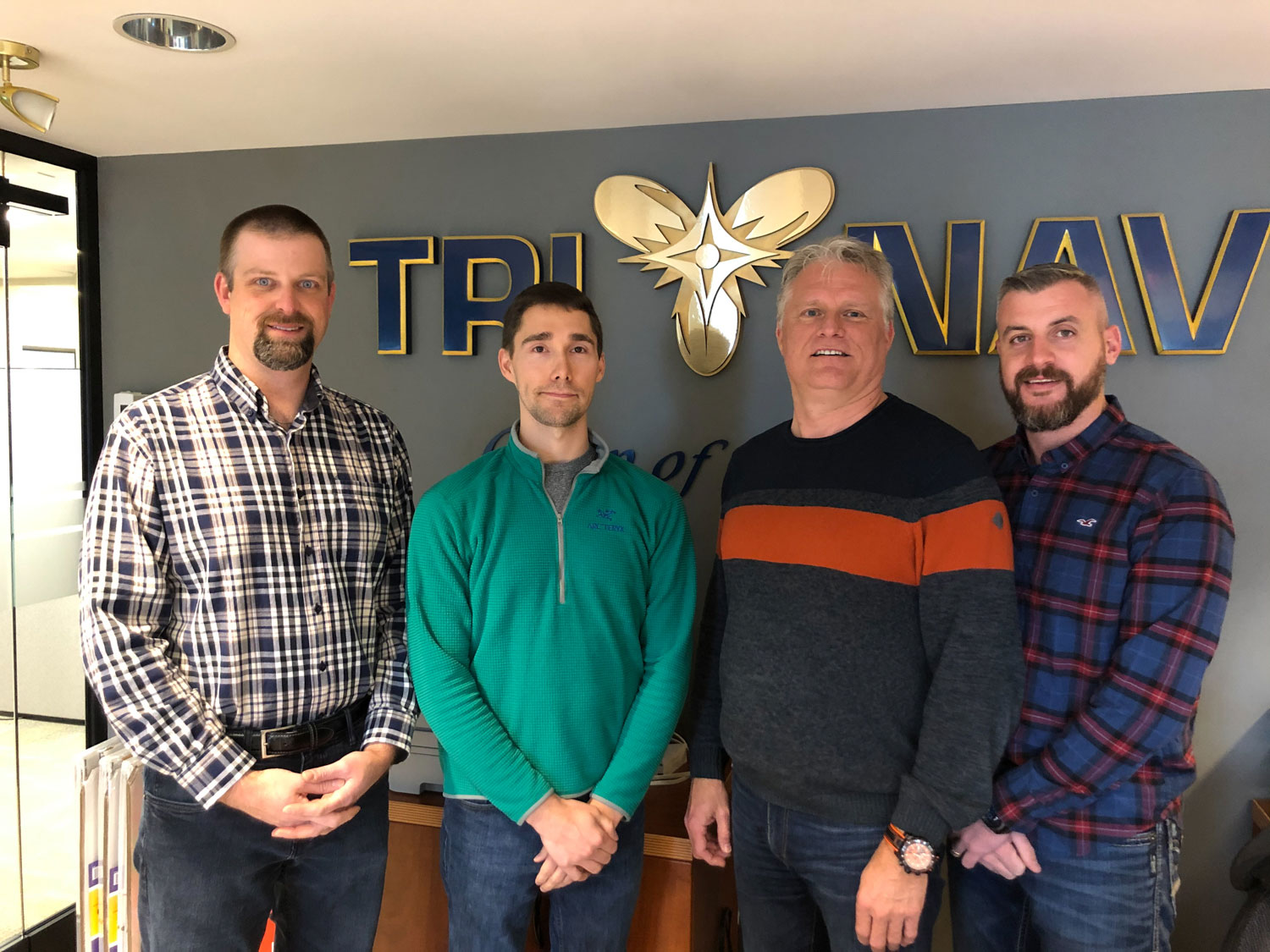
Newfoundland and Labrador’s TriNav Marine Design has been designing fishing boats for the Atlantic Canadian market for 25 years.
The company submitted its proposal to the ACOA Hull Design Challenge to fine tune one of their existing designs.
“We wanted to incorporate some innovative design features into our typical and popular 14.9 meter fishing vessel. The fishing industry has always needed to be innovative, and this (Challenge) is an important step forward focusing exclusively on hull efficiency.”
What do they think of the challenge format?
“With 25 plus years experience and a leading designer of fishing boats in the Atlantic region, we felt we needed to be a participant. Competition in a friendly challenge is always interesting.”
Wedgeport Boats Ltd.
Lower Wedgeport, Nova Scotia
https://wedgeportboats.com/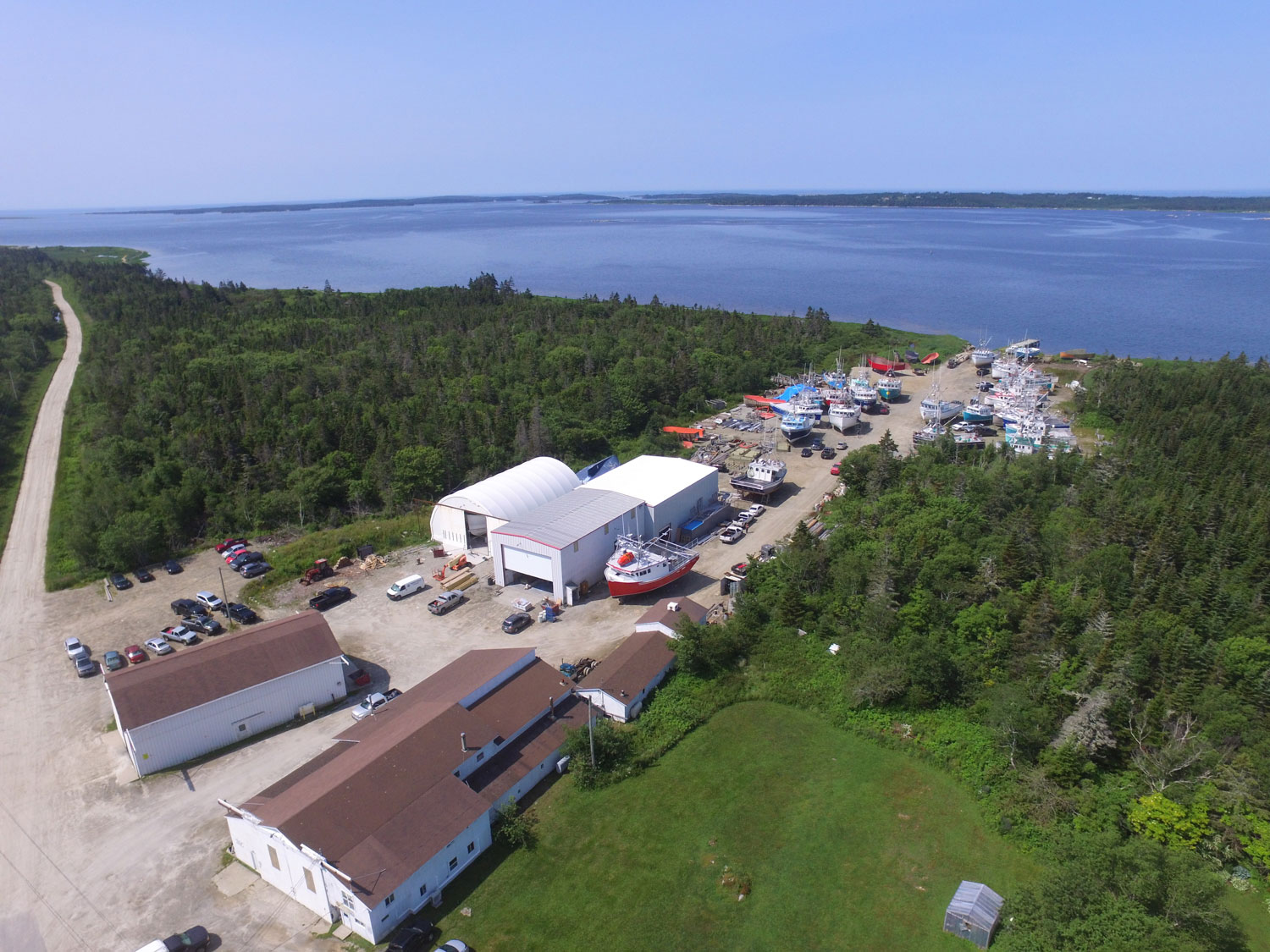
Builders of commercial fishing and aquaculture vessels for over 20 years, Wedgeport Boats Limited sells its boats throughout Atlantic Canada, Quebec, British Columbia and the northeastern United States.
There are a couple of motivations behind Wedgeport Boats’ application to the ACOA Hull Desgin Challenge.
“We really like the idea of designing a hull which will save both time and fuel costs while not compromising what traditional fishing vessels have evolved into in this present day. This Challenge also allows us to design and promote another unique variation of a hull into the custom boat building industry.”
And for Wedgeport Boats Limited, the Challenge approach provides additional benefits. “This challenge allows us the opportunity to be involved in a friendly competition with others in the industry, and it allows us to see the different skill sets of the pretty amazing individuals we work with in building our vessels.”
-
Semi-Finalists
Semi-Finalists Applicant Location Link ABCO Industries Limited Lunenburg, Nova Scotia http://www.abco.ca/ Allswater Halifax, NS and St. John’s, NL http://www.allswater.com/ Aspin Kemp & Associates Montague, Prince Edward Island https://www.aka-group.com/ Atlantic Boat Builders Bas-Caraquet, New Brunswick http://atlnaval.com/ Blumara Corp. Halifax, Nova Scotia http://blumara.com/ D.M.R. Boat Design Ltd. & Aylward Fibreglass Inc. Terence Bay, Nova Scotia & Shelburne, Nova Scotia --- TriNav Marine Design Inc. St. John’s, Newfoundland and Labrador https://trinavmarinedesign.com/ Wedgeport Boats Ltd. Lower Wedgeport, Nova Scotia https://wedgeportboats.com/
Stay connected
Send us your questions at: acoa.cleantechimpact-impacttechpropre.apeca@canada.ca. We will get back to you within two business days.
Join the conversation and get the latest updates on the Hull Design Efficiency Challenge
Hashtag: #HullFishNSeaChallenge
Challenge details
Who can apply?
The Hull Design Efficiency Challenge is pan-Atlantic in scope and open to small and medium-sized businesses, other for-profit and not-for-profit organizations, Indigenous organizations and groups, and post-secondary/academic institutions registered to do business in Atlantic Canada.
Key dates
- July 31, 2019: Stage 1 – Challenge launched and application intake begins
- September 8, 2019: Application deadline
- September 30, 2019: Stage 2 – Up to 10 semi-finalists selected
- January 31, 2020: Stage 3 – Up to three finalists selected
- January 2021: Grand Prize Winner selected
Important Resources
Last modified: 2025-01-26