Blog
How Can Challenge Prizes Help Advance Broader Policy Objectives?
Impact Canada, Impact & Innovation Unit, Privy Council Office

In less than two sentences, a challenge statement has the potential to make — or break — a prize/challenge. Read on to learn more about these small, but mighty, elements of prize/challenge design.
A challenge statement is a prize/challenge’s call to action. It provides a clear, concise goal for participants and helps them to understand the aims and terms of the prize/challenge.
In general, a challenge statement includes the objective of the prize/challenge (the what) and the criteria that will be used to assess if the objective has been met (the how). For example, the challenge statement for the ANSARI XPrize was “…to build a reliable, reusable, privately-financed, manned spaceship capable of carrying three people to 100 kilometers about the Earth’s surface twice within two weeks.”
The challenge statement may also include the prize amount and/or the population or group who will benefit from addressing the problem, such as the example of the challenge statement for Nesta’s Longitude Prize:
“The Longitude Prize is a £10m prize fund that will reward a competitor that can develop a point-of-care diagnostic test that will conserve antibiotics for future generations and revolutionize the delivery of global healthcare. The test must be accurate rapid, affordable and easy to use anywhere in the world.”
The challenge statement lays the groundwork for the overall process; thus, developing an effective call to action requires having an idea of the prize/challenge details. This could mean that the challenge statement is not finalized until closer to the end of the design process. There are benefits to developing a draft challenge statement in the early stages, however, because it can help to focus ideas, identify assumptions, and build buy-in for the approach. Use the work that you did to define your problem to build a solid first draft and then modify it as you progress through the prize/challenge design process.
As you work to develop your challenge statement, here are some points to keep in mind:
Resources and tools to help you develop challenge statements are available online. For examples of challenge statements, take a look at the prizes/challenges offered by Nesta or those on challenges.gov. And, as always, don’t hesitate to contact us in the Privy Council Office’s Impact and Innovation Unit, if you have any questions or need any help.

Finding innovative solutions to today’s complex environmental and social challenges requires diverse skills and creative thinking. Gone are the days of the lone inventor hitting on a solution — today’s challenges require collaboration, bringing together people with different skills to try and solve problems in different ways. And often, the usual suspects aren’t the only ones with good ideas.
Over recent years challenge prizes have seen a renaissance as tools for innovation.
Challenge prizes pose a specific question and offer a financial reward to anyone who can solve it the fastest. Not only do they draw in more innovators from wider fields, but they come up with better solutions.
Prizes aren’t a new idea. The Longitude Prize, launched in 1714 was aimed at finding a solution to accurately measure longitude at sea. John Harrison created a portable clock that did just this, and won over £23,000 — because knowing the time is the key to accurately navigating by the stars. But just as importantly, a range of other inventors won smaller prizes from the Board of Longitude. The Longitude Prize didn’t insist that the solution had to be a clock — and so among the winners were wildly different approaches to the problem, from new astronomical methods to improved designs for the sextant.
The radical openness of the original Longitude Prize — almost complete agnosticism about what the solution should look like — is remarkably well suited to the way innovation works today.
In 2014, to celebrate the 300th anniversary of the Longitude Act, Nesta launched a new Longitude Prize: this time, it is to help solve the alarming rise of drug-resistant infections. Poor use of antibiotics over the past 70 years means they are getting less effective, just as the supply of new antibiotic drugs is slowing: we’re losing the race against the superbugs. And there isn’t much incentive to solve the problem either. Drug companies aren’t incentivised to sell fewer drugs, nor are doctors rewarded for not prescribing them. So the new Longitude Prize is all about creating new diagnostic tests that tell people whether or not they need antibiotics — reducing the widespread misuse that leads to resistance.
But beyond a few key criteria, we’re open to any reasonable way of solving the problem. It could be solved by engineers, doctors or chemists; they might solve it with a machine, a reagent or some smart software. Providing it fulfils our 8 criteria, including cheap and accurate, we don’t mind.
So far, 250 teams in over 40 countries have registered to participate in the prize. And in recognition that not every contestant starts from a level playing field, we’ve handed out over £250,000 in seed funding to promising teams — including one round focused specifically on the impressive, but undercapitalised biotechnology sector in India. This is important. It’s not just a question of being fair; it’s making sure that all the teams who can bring a meaningful contribution are able to take part.
We’ve seen this in a number of our prizes. In the Dynamic Demand Challenge, a prize we ran to help make electricity use more eco-friendly, two of the finalists have gone on to great commercial success: Upside Energy and Powervault both unlocked significant new investments following being shortlisted.
We want to use these prizes to solve problems faster and better — making the most of talent, ideas and motivations out there, wherever they may be.
That’s why we’re excited to be working with the Canadian Government that are now making a concerted and pioneering effort to develop prizes to solve problems faster and better in Canada — ranging from opioid detection technologies, to food security and housing.
The first question though is what are the problems that need open innovation?

Here in the Impact and Innovation Unit at PCO, our mission is to drive a shift in the way the Government uses new tools to help address complex public policy challenges — and our focus is on the “how”. But as the new Centre of Expertise that supports the Impact Canada Initiative — a whole-of-government effort to help departments accelerate the adoption of outcomes-based funding approaches — we know that the “who” matters just as much. Our team has been cultivated to be multidisciplinary in nature, in order to support a broad range of emerging Government innovations, from social finance to impact measurement and behavioural insights.
We have learned that for an idea to move from vision to execution, it must be created and supported by a team that meets project needs at all stages of design and execution. Never underestimate how hard that can be! On a larger scale, the public service has the same need for a dexterous, nimble and skill-flexible workforce. We are looking to support departments to move toward their experimentation and innovation goals through our Innovative Staffing Resource Management Strategy. We will help to surface and seed talent across the public service, onboarding individuals from outside the government and from within departments/agencies, to build capacity across Departments and Agencies for the practical application of innovative approaches to achieving greater impact.
The IIU’s innovative staffing strategy consists of three streams: Fellowship, wherein subject matter experts join government on a term to lead priority projects in their field of expertise (e.g. behavioural insights or innovative finance); Affiliates, comprised of a roster of renowned leaders who can provide ad hoc advice and guidance on project execution and broader strategic issues in their fields of expertise and; Policy and Program Entrepreneurs.
In our role as Secretariat to the Deputy Minister Task Force on Public Sector Innovation, we are moving from vision to action with the Policy and Program Entrepreneurs stream of our innovative staffing strategy. The Task Force is focused on realizing the Government’s priorities in policy and program experimentation and innovation, with an emphasis on core systems transformation and disruptive policy solutions. To support this ambitious agenda, Policy and Program Entrepreneurs (PPE’s) will be recruited with an expansive pool of skill sets to support the TF-PSI, and its members, to deliver on priority projects.
PPE’s will be drafted from within Departments and across professional categories to undertake a full-time, one year position supporting their Deputies’ projects through the Task Force. These employees will work collectively with their departments and PCO, and have opportunities for professional and leadership development, access to new networks, as well as coaching and mentoring. We expect that new PPE’s will be in place by February 2018.
Like so many of you, we in the IIU are working to build a public service “dream team” around each of our projects, and are honoured to play a role in supporting other Departments to launch and accelerate innovation by ensuring, (as the boss says) that “the right people are working in the right place at the right time”.

Measuring impact by design: A guide to methods for impact measurement
Information contained in this publication or product may be reproduced, in part or in whole, and by any means, for personal or public non-commercial purposes without charge or further permission, unless otherwise specified. Commercial reproduction and distribution are prohibited except with written permission from the Privy Council Office.
For more information, contact:
Impact Canada, Privy Council Office
85 Sparks Street, Room 1000
Ottawa ON Canada K1A 0A3
info@pco-bcp.gc.ca
© His Majesty the King in Right of Canada, 2024.
Cette publication est également disponible en français : Modèles de mesure des impacts : Guide des méthodes de mesure des impacts
ISBN:
CP22-174/2019E-PDF
978-0-660-29539-8
A BI Fellow at Environment and Climate Change Canada
Impact Canada, Impact & Innovation Unit, Privy Council Office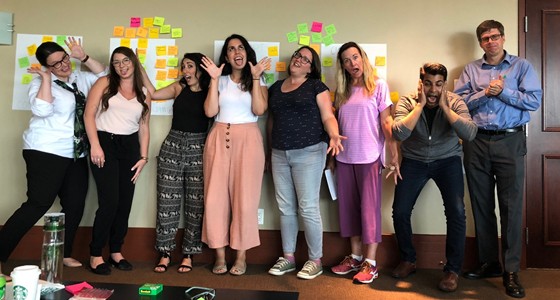
It’s been an interesting and exciting few months for the first cohort of behavioural insights (BI) fellows as we settle in to our new roles (all first time federal public servants!), get to know our IIU family, and start tackling our placements. As BI fellows, we are hired in to the IIU and assigned to a federal department or agency for 12 months to deliver on project outcomes by applying BI methods. I myself am at Environment and Climate Change Canada (ECCC), and fortunate to be placed in the area of study that first inspired my journey from basic research into the world of BI: environmental sustainability.
So, what do a behavioural scientist and ECCC have in common? Environmental challenges –from climate change to plastics in oceans and everything in between — are some of the most hard-pressing, top priority problems faced by our national and global communities. And crucial to addressing these problems is addressing the roles that behaviour and human cognition play: How are the decisions and habits of people unsustainable or harmful to the environment, and why are we like this? BI provides us with the answers to these questions, and alongside other traditional policy tools, can help build strategies to encourage sustainable behaviours and promote compliance with environmental regulations.
In fact, BI fits snugly into Environment and Climate Change’s core innovation agenda: the recognized need for non-traditional government approaches and innovative policy tools to support effective and impactful outcomes. And so, in my non-traditional fellowship position, armed with the innovative tools of BI, I was brought on to work in the Innovation@ECCC team, the ever-evolving “hub” for innovation at ECCC.
Summer 2018 has truly brought this team to life with the bulk of staffing complete and our first official team retreat wrapped up. Although the innovation movement at ECCC is not by any means novel, our retreat allowed the newly formed unit to come together as a team and work collaboratively to build out the core functions of Innovation@ECCC.
So what are these functions? At its core, Innovation@ECCC is tasked with providing horizontal support across ECCC in building the skills, resources, activities, connectivity, and tools needed to embed innovation into ECCC — and to have fun doing it.
I think it’s clear why Innovation@ECCC is a good fit for a BI fellow, both in the recognized need for innovative practices like BI, and the overall push to do things differently in government…while actually laying out the steps for getting there.
What does this mean for my year ahead? I’m tasked with bringing not only a behavioural approach to pressing issues like plastics waste, energy efficiency, and compliance promotion, but demonstrating impact and supporting the use of experimentation in government by testing behaviourally informed solutions while building capacity across the department to do the same. The road ahead may be a challenging dive into new territory, but like anything important, worth it.

In the 1970s, many major orchestras in the United States introduced a novel approach to auditioning musicians. Rather than having musicians audition in plain sight of the judge, musicians now played from behind a screen so that they could not be seen, only heard. So what happened? It turns out that after these changes were instituted, the proportion of women musicians hired by the top five orchestras in the nation more than tripled. Scholars attributed much of this difference to the change in the auditioning process.
There are three fascinating aspects to these findings: 1) under the old audition system, judges, highly trained musicians themselves, were unable to make an objective evaluation of the music that wasn’t influenced by the gender of the musician; 2) when the screen system was introduced, there was a dramatic increase in the proportion of women hired — showing how simple interventions could reduce massive gender disparities, and; 3) the orchestras were cognizant that these biases could exist, and made the bold move to introduce the screen system. It was a dramatic display of organizations’ willingness to admit that bias may exist and counteract it not through explicit instruction or rules, but rather through a behaviourally informed solution that takes human bias into account when developing a hiring process.
As a Behavioural Insights Fellow at the Impact and Innovation Unit (IIU) working with Status of Women Canada, I often come back to this example when thinking about how we can create more inclusive policies and programs that benefit all Canadians, and how we can use behavioural science to tackle bigger gender-based “wicked problems” in our society. Awareness campaigns and diversity training have shown limited effectiveness at changing behaviour. This is in part because ingrained biases are not easy to override solely by providing more information to the person whose behaviour we want to change. Behaviour change can be facilitated when we design interventions that account for the fact that people have limited attention, they form quick judgments without evidence, they like to do whatever they see most people doing, and they tend to prefer the status quo, whatever that may be. To tackle problems in diversity and inclusion, we have to account for the fact that human beings exist on the other end of our policy.
To design the best policies and programs we need to think like scientists and question our assumptions. What evidence do we have that this is the best way of carrying out a policy or program? How can we test our assumptions to know what’s working and what’s not working?
One way to figure this out is by leveraging an integral feature of the behavioural science approach-experimentation. When we compare potential “treatment” interventions to a status quo “control” condition on the outcome of interest, we can reach evidence-based conclusions about what works and what doesn’t. This approach may seem novel in the diversity and inclusion space, but in fact, experimental psychologists in academic settings have been using this methodology to study bias and design techniques to counteract it for decades. Government is steadily catching up.
Behavioural insights is increasingly being regarded as a complementary policy tool to tackle complex and wide-ranging problems such as negating hiring and promotion bias, ensuring equal access for both parents to the labour market and childcare, and decreasing gender-based violence. In the policy realm, this work is in its infancy, but I’m excited by what feels like a new dawn — government’s appetite to tackle these issues, and also seek out the highest standard of evidence to do so.
Moving forward with this approach will no doubt have its challenges. Processes, procedures, and mindsets cannot be changed overnight. But I’m confident that with our shared values including a belief in equality as well as our desire for stronger evidence, the use of behavioural insights will help further gender equality. The integration of behavioural insights at Status of Women Canada presents a novel opportunity to make these advances in Canada, and I’m thrilled to be a part of this effort.